October 7, 2026 · 8 min read
Avoid a Surprise 1 Day Charge: Fleet Policy Checklist for Van Renters
Avoid a Surprise 1 Day Charge: Fleet Policy Checklist for Van Renters

Most van rental providers set a 1-day (24-hour) minimum, though some allow hourly or half-day blocks and others require a weekend or multi-day minimum during peak season. The exact rule always comes down to the contract you sign, so confirm pickup and return times, deposit terms, and mileage limits before you pay. Leases are a different product entirely, typically built for terms spanning multiple years rather than days or weeks.
TL;DR:
- Billing runs on a rolling daily clock, so a 90 minute delay can trigger another full day rather than a prorated fee.
- Peak weekends and holidays may require two or three day blocks when fleet availability is tight and demand is high.
- Compare total cost, including daily charges, mileage overages, deposit holds, fuel rules, insurance, and cancellation penalties; deposits are separate from rental fees.
- If you need only part of a day, ask about hourly or half day pricing and whether off peak timing qualifies for a lower rate.
- For needs lasting months, ask about weekly or monthly rates; leases typically last 24 months or longer and may carry steep early termination fees.
Table of Contents
- What does “minimum rental period” actually mean?
- Why do rental companies set minimum periods in the first place?
- How minimum periods affect what you actually pay
- How a short-term rental differs from a vehicle lease
- A practical checklist before you book a van
- Where this policy guidance comes from
- When a short minimum actually works in your favor
- How Sprinter Van Rentals keeps the terms clear
- FAQ
- Sources
What does “minimum rental period” actually mean?
A minimum rental period is the smallest block of time a provider will let you book, and it’s set by contract, not by law. It tells you the shortest window you can reserve a van for, even if you only need it for a couple of hours.
Common minimum blocks include:
- Hourly: rare for large passenger vans, more common for sedans or small cars.
- Half-day: a few providers offer this for local, in-town use.
- 24-hour/1-day: the most common minimum for van fleets, billed on a rolling 24-hour clock.
- Weekend or 3-day: often required during peak travel weekends or holiday periods.
- Weekly or monthly: discounted short-term rates for extended trips.
Regulatory definitions sometimes add confusion here. UK tax guidance on hire of transport uses a 30-day threshold to separate “short-term hire” from longer arrangements for VAT purposes, but that’s a tax classification, not a universal rental rule. Your actual minimum comes from the provider’s policy and the agreement you sign, wherever you’re booking.
Why do rental companies set minimum periods in the first place?
Every booking carries fixed costs that don’t shrink just because the rental is short. Cleaning, a safety inspection, paperwork, and moving the vehicle into position all cost roughly the same whether a renter keeps the van for three hours or three days. A 1-day minimum lets a provider recover those costs without pricing every short hire at a loss.
Seasonal demand plays a role too. During peak windows, weekend getaways, graduation season, wedding weekends, providers often package rentals into 2 or 3-day blocks because that’s when demand is highest and fleet availability is tightest.
Large-group vans add another layer. A 12 or 15-passenger van needs extra seating checks, higher insurance coverage, and often specific driver paperwork, so providers lean toward day or weekend minimums rather than hourly blocks to keep these vehicles moving efficiently between groups.
Billing itself usually runs on a 24-hour cycle rather than a calendar day. Pick up a van at 10 a.m. Saturday, and your return deadline is 10 a.m. Sunday, not midnight. Miss that window by even an hour and you may be charged for a second full day.

Pro Tip: Always confirm your exact pickup and return times in writing, since “1-day” rarely means “calendar day.”
How minimum periods affect what you actually pay
A low headline minimum doesn’t tell you much about total cost until you check the surrounding contract terms. A few clauses tend to matter more than the minimum itself:
- Deposit: most providers hold a refundable deposit, separate from the rental fee, and release it only after a post-return inspection.
- Mileage allowance: many rentals include a daily or weekly mileage cap, with per-mile charges once you exceed it.
- Fuel policy: some providers require a full tank at return, others charge a flat refueling fee.
- Insurance or damage waiver: coverage levels vary, and skipping it can mean paying full repair costs out of pocket.
- No-show and cancellation penalties: a common policy example from university fleet guidance charges a full day’s rate when cancellation notice falls under 24 hours.
Billing cadence and rounding rules matter just as much; to avoid hidden fees on U.S. hourly car service, comparing true totals is essential. Because most fleets bill in 24-hour increments, returning a van 90 minutes late can trigger a full extra day’s charge rather than a prorated fee.
Before comparing providers, add up the full picture: daily rate multiplied by the number of days, plus expected mileage overage, plus the deposit hold. That total, not the advertised minimum, is what tells you the real cost of the trip.
How a short-term rental differs from a vehicle lease
Short rentals and leases solve different problems. A rental is built for days, weeks, or occasionally a month, with a simple return date and straightforward billing. A lease is a multi-year financial commitment, typically running 24, 36, 48, or 60 months, with residual-value calculations and mileage limits baked into the contract.
Ending a lease early can be expensive. Consumer finance guidance notes that leases usually run two to four years and can include steep early-termination charges, which makes them a poor substitute for anyone who only needs a vehicle for a month or two.
If your need is measured in months rather than years, a negotiated long-term rental or fleet rate is almost always the better fit than locking into a lease you may want to exit early.

A practical checklist before you book a van
A few minutes of questions up front can save you from an unexpected bill later.
- Ask for the exact minimum period and billing cadence, including how rounding works if you return the van a bit late.
- Confirm the deposit amount and how it’s refunded, along with cancellation and no-show penalties.
- Check the mileage allowance and per-mile overage fee, especially for longer road trips.
- Review the fuel and insurance policy so you know what happens if the tank isn’t full or damage occurs.
- Save your reservation confirmation, including the stated pickup and return times, in case a dispute comes up later.
If you only need a van for part of a day, ask directly about hourly or half-day options, or whether off-peak timing unlocks a lower rate.
Pro Tip: A written confirmation email with your exact pickup and return hours is the easiest way to avoid a billing dispute later.
Where this policy guidance comes from
Gabriel has written several policy-focused pieces for our blog covering driver age requirements, deposit practices, and booking timing for group van rentals. These posts translate contract language into plain questions renters can ask before committing.
We document 24-hour billing and 1-day minimum practices across our city pages, each listing explicit reservation terms so group renters know what they’re agreeing to before they book.
When a short minimum actually works in your favor
For airport runs or single-event shuttles, a 1-day minimum is usually the right call since you’re paying for exactly the window you need. Multi-day road trips or weekend group trips often make more sense booked as a block from the start, since providers frequently price those bundles more efficiently than stacking back-to-back single-day rentals.
What matters more than the headline minimum is the booking window and mileage policy attached to it. A van with a generous mileage allowance and a flexible cancellation window often beats a slightly cheaper option with rigid terms, especially for groups whose plans can shift.
— Gabriel
How Sprinter Van Rentals keeps the terms clear
We offer 12 and 15-passenger Sprinter vans, with city pages that provide local availability, pricing, and booking policy information before you commit to a date.
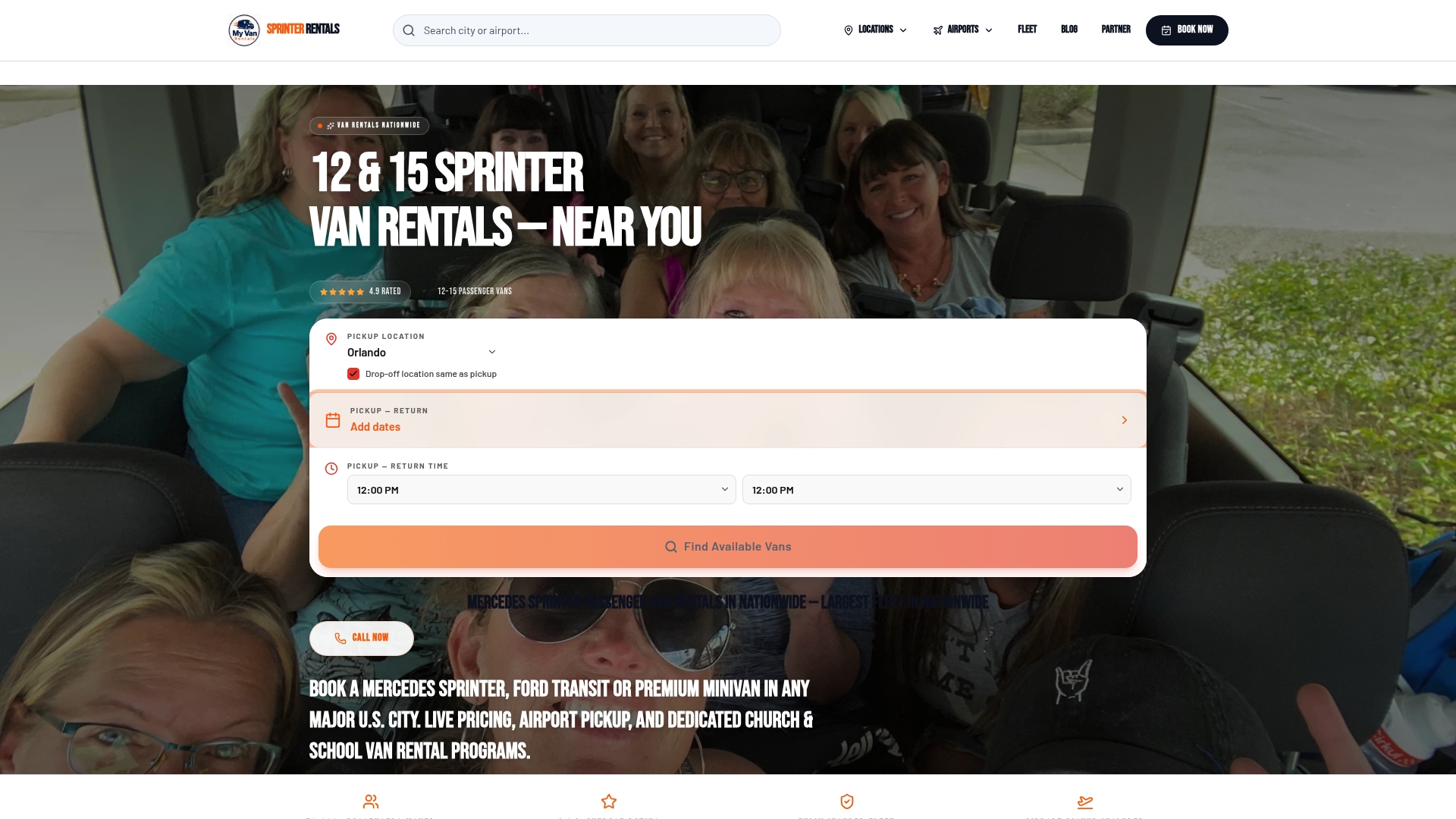
Checking a city landing page before you book means you see:
- The specific minimum rental period and billing cadence for that location.
- Deposit and mileage terms tied to your pickup city.
- Confirmation details for your exact reservation window.
If you’re planning a group trip, check our Denver Sprinter van rentals page or San Diego Sprinter van rentals page for current availability and the exact terms that apply to your dates.
FAQ
Can I rent a van for 2 months?
Most van rental providers can accommodate multi-week or month-long bookings, often at a discounted weekly or monthly rate rather than the standard daily price. Confirm the provider’s specific long-term rate and mileage allowance before booking, since terms vary by fleet.
What is the shortest rental period?
The shortest period depends on the provider: some offer hourly or half-day blocks, but many van fleets set a 1-day, 24-hour minimum as their shortest bookable window. Always check the specific provider’s policy rather than assuming a universal minimum.
What is the shortest period for a lease?
Leases are structured differently from rentals and typically run 24 months or longer, since they involve residual-value calculations tied to multi-year terms. If you need a vehicle for weeks rather than years, a short-term rental is the more practical option.
What is the minimum duration of a rental agreement?
The minimum duration is set by each provider’s contract and commonly ranges from a few hours to a full day, with many fleets defaulting to a 1-day minimum. Regional disclosure standards, like the CARICOM short-term rental specification, confirm that minimum periods should be stated clearly alongside rates, deposit terms, extension rules, and no-show charges.
Does Sprinter Van Rentals have a set minimum booking period?
Minimum booking periods vary by city and vehicle, so we recommend checking the specific city landing page for your pickup location before reserving. Each page lists the applicable terms so you know the exact minimum and billing cadence in advance.
Sources
- Vehicle Leasing: Negotiating Terms and Comparing Lease Offers (Federal Reserve)
- What should I know about leasing versus buying a car? (CFPB)
- VATPOSS11350 - Hire of means of transport: continuous possession or use (HMRC)
- Daily rentals — University of Michigan Transportation (fleet policy example)
Recommended
Keep reading
How Much Is a Sprinter Van Rental? 2026 Pricing Guide
Real Mercedes-Benz Sprinter van rental prices in 2026 — daily rates, mileage, insurance, delivery fees, and how to lower your total.
How to Start a Sprinter Van Rental Business (2026 Playbook)
Step-by-step guide to launching a Sprinter van rental business — licensing, DOT/FMCSA rules, insurance, fleet financing, and marketing.
Mercedes Sprinter Van Rental in Orlando, FL — Where to Rent
Compare Mercedes-Benz Sprinter van rental options in Orlando, FL — MCO airport delivery, theme park runs, and 12 & 15-passenger pricing.