August 25, 2026 · 9 min read
Sprinter Van Dimensions: Length, Width, and Height Guide
Sprinter Van Dimensions: Length, Width, and Height Guide

Sprinter van dimensions range from about 233.5 inches to 290 inches in overall length depending on wheelbase, with width at roughly 92.3 inches when you include the mirrors. Overall height spans 96 to 118 inches across standard and high-roof builds, and standing interior height runs from about 68 inches to 79 inches. Cargo volume falls within a typical range depending on configuration.
- Length: ranges approximately from the shortest to the longest wheelbase options
- Width with mirrors: roughly 92 inches typical
- Height: spans a range depending on roof height
- Standing interior height: varies by model and roof height
- Cargo volume: 319–533 cubic feet
Quick fact: A 170" extended-wheelbase Sprinter with a high roof can be long and tall enough to graze the header of a standard 7-foot garage door.
Key Takeaways
Sprinter van dimensions hinge on two decisions, wheelbase and roof height, which together determine length (233.5–290 inches), width (~92.3 inches with mirrors), and standing headroom (68–79 inches).
| Point | Details |
|---|---|
| Wheelbase sets length | 144" wheelbase runs ~233.5–234 in; 170" wheelbase runs ~274 in, or ~290 in extended. |
| Roof choice sets headroom | Standard roof offers ~68 in standing height; high roof offers ~79 in. |
| Width stays consistent | Most configurations list ~92.3 in with mirrors extended across trims. |
| Trim affects height more than length | 3500XD and 4500 trims can add an inch or more of height versus 2500/3500. |
| Volume isn’t payload | Cargo volume (319–533 cu ft) tells you space, not weight capacity; check GVWR separately. |
Table of Contents
- What Are the Exact Sprinter Van Dimensions by Configuration?
- How Do Interior Sprinter Passenger Van Dimensions Compare to Cargo Configurations?
- What Do Sprinter Dimensions Actually Mean for Loading and Space Planning?
- How Do You Check Garage and Parking Clearance Before Buying?
- How Do These Dimensions Look in a Real Rental Fleet?
- Where to Verify Sprinter Van Specs Yourself
- What Actually Matters When You’re Reading Sprinter Specs
- Sources
What Are the Exact Sprinter Van Dimensions by Configuration?
The wheelbase you choose sets the length, and the roof height you choose sets the ceiling. Those two decisions, more than any trim badge, determine whether a Sprinter fits your driveway, your loading dock, or your camper conversion plans.
On the 144" wheelbase, the Sprinter measures approximately 233.5 to 234 inches in overall length, according to figures listed on Mercedes-Benz’s own cargo van specification page and cross-checked against iSeeCars’ aggregated spec tables. Height on this shortest wheelbase runs about 96 to 100 inches with a standard roof, climbing to roughly 107 to 111 inches with a high roof, depending on trim.
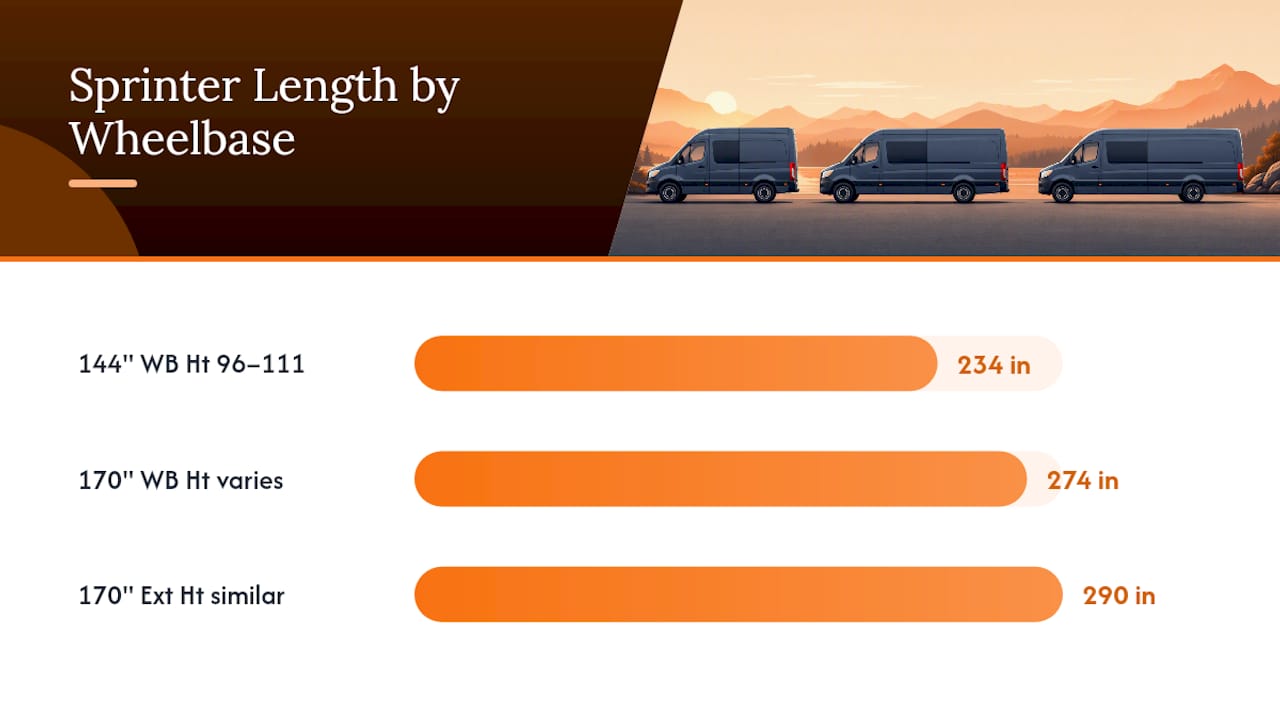
Step up to the 170" wheelbase and length increases to about 274 inches, with an extended option near 290 inches. High-roof height on this chassis varies and is taller than standard roof versions.
Width is the one figure that stays fairly consistent across the lineup. Most configurations list about 92 inches with mirrors extended, though mirror packages and camera-monitor systems can shift the value slightly.
Here’s how the range breaks down by wheelbase:
- 144" wheelbase: length around 234 inches, height varies with roof.
- 170" wheelbase: length around 274 inches, height varies with roof.
- 170" extended: length near 290 inches, height similar to standard 170" wheelbase.
- Width with mirrors: approximately 92 inches across most configurations.
Trim level matters more than most buyers expect. The 2500 and 3500 trims typically share height figures within a given roof option, but the heavier-duty 3500XD and 4500 trims can ride on different suspension setups that add an inch or more to overall height. If you’re measuring against a fixed clearance like a parking garage, always check the specific trim, not just the wheelbase.
How Do Interior Sprinter Passenger Van Dimensions Compare to Cargo Configurations?
Interior space is where cargo, crew, and passenger Sprinters start to diverge, even when they share the same exterior footprint. Standing height is the number most buyers fixate on, and for good reason: it decides whether you can walk upright from the driver’s seat to the back doors.
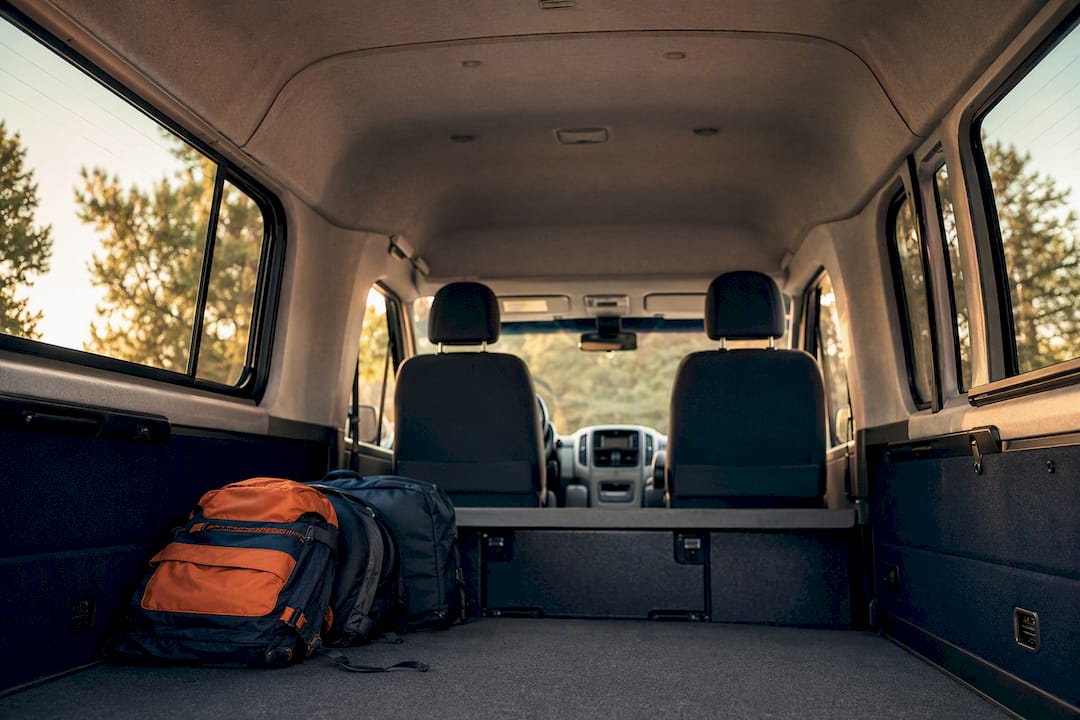
Standard-roof Sprinters offer about 68 inches of standing height, according to specifications on Mercedes-Benz’s passenger van page. That’s workable for loading and unloading but tight for anyone over 5’8" trying to move around inside. High-roof configurations solve that problem, offering roughly 79 inches of headroom, and passenger high-roof variants occasionally list slightly taller figures depending on how the manufacturer measures the roof cap and headliner.
Cargo bed length scales roughly with the wheelbase, increasing from shorter to longer configurations. That length is measured from the rear door threshold to the front bulkhead, which matters more for load planning than the vehicle’s overall exterior length does.
Cargo volume figures track the same pattern:
- Short wheelbase with standard roof offers lower cargo volume.
- Long wheelbase with high roof and extended length offers higher cargo volume.
- Mid-range configurations fall between these extremes depending on roof and length.
Max usable floor width is typically about 70 inches, though the width narrows between wheel-arch recesses. This usable width determines fit for wide cargo or side-by-side seating rather than the external width with mirrors.
For passenger configurations, seating capacity connects directly to that same cargo depth measurement. A 12-passenger layout leaves noticeably more room behind the last row for luggage than a 15-passenger layout does, since three fewer seats free up several feet of depth. If you’re comparing layouts for a group trip, the Sprinter passenger van interior guide breaks down how usable cabin space changes between the two most common seating configurations.
What Do Sprinter Dimensions Actually Mean for Loading and Space Planning?
Numbers on a spec sheet only matter once you translate them into whether your stuff, or your passengers, actually fit. Here’s how to run that check quickly.
- Pallet fit: A standard 48x40-inch pallet fits lengthwise in nearly every Sprinter cargo bed length once you’re past the shortest 144" configuration, and it fits sideways (48 inches across) in any config with the 70-inch usable floor width, provided you leave clearance for wheel arches.
- Standing headroom: If you’re planning a camper build or need to work standing up inside, the 68-inch standard roof works only for shorter installers; the 79-inch high roof is the practical minimum most upfitters recommend for comfortable standing work.
- Luggage estimates: A 12-passenger layout generally handles a mix of full-size suitcases and carry-ons behind the last row; a 15-passenger layout, with three additional seats consuming that depth, usually limits you to smaller bags or roof-mounted storage for full luggage loads.
- Payload check: Volume and length tell you if something fits. They don’t tell you if you can carry it. Always check the specific model’s GVWR and payload rating on the manufacturer’s spec page before assuming a “big cargo area” means “high weight capacity.”
Pro Tip: Measure your own gear before you measure the van. A 79-inch high-roof interior sounds generous until you realize your ladder rack or shelving unit eats six inches of that height on installation.
How Do You Check Garage and Parking Clearance Before Buying?
Most residential garage doors offer around 80 to 84 inches of clearance once you account for the door track and opener hardware, which is why a 96-inch standard-roof Sprinter already won’t clear a typical garage, let alone a high-roof model at 107 inches or taller.
- Build in a 3 to 6 inch buffer beyond your garage’s listed clearance height before assuming a fit.
- Folding mirrors can trim a few inches off the 92.3-inch mirror-to-mirror width for tight alleys or narrow carports.
- Check ground clearance against steep driveway aprons or loading ramps to avoid scraping the front bumper or rear step.
- Walk the actual space with a tape measure before finalizing a purchase or upfit plan, since listed dimensions assume flat, obstruction-free clearance.
| Check | What to measure |
|---|---|
| Garage height | Actual door track clearance minus a 3–6 inch buffer |
| Width | Mirror-to-mirror vs. folded-mirror width for narrow passages |
| Ground clearance | Ramp or driveway angle at steepest point |
How Do These Dimensions Look in a Real Rental Fleet?
Spec sheets tell you the numbers. Photos and a tape measure tell you how those numbers actually behave once seats, luggage racks, and real passengers are in the mix.
- 12-passenger layout: Popular for airport runs and smaller wedding parties, where the extra depth behind the last row comfortably handles checked luggage for a full group.
- 15-passenger layout: The default choice for sports teams and larger corporate groups, where seating count matters more than rear cargo depth.
- Usable width confirmation: Fleet teams measure between the wheel-arch panels, not mirror to mirror, since that’s the width that determines whether three adults fit shoulder to shoulder in a bench row.
- Headroom checks: A physical tape measure from floor to headliner confirms the 79-inch high-roof figure holds up once flooring and seat mounts are installed.
The gap between a spec sheet’s “79 inches standing height” and what a 6-foot passenger actually experiences walking down the aisle is usually smaller than people expect, but it’s the luggage depth behind the last row that surprises most first-time group renters.
Details on how these layouts hold up in practice are covered in the 12-passenger Sprinter van guide and the 15-passenger interior layout breakdown.
Once you’ve confirmed a configuration fits your group and your gear, Sprinter Van Rentals makes booking straightforward. Choose from 12- and 15-passenger Sprinter vans available nationwide, with options for airport pickup, executive trim, and door-to-door delivery. If you already know you need the extended 170" wheelbase for a larger group with heavier luggage, the fleet configuration page lets you match the exact layout to your trip before you request a quote.
Where to Verify Sprinter Van Specs Yourself
- Mercedes-Benz’s official Sprinter cargo van page for exterior length, width, and trim-level detail
- Mercedes-Benz’s passenger van specification page for standing height and passenger-specific figures
- iSeeCars’ Sprinter dimension tables for decimalized cross-checks across trims and model years
- Dealership spec pages for model-year callouts and cargo volume ranges
What Actually Matters When You’re Reading Sprinter Specs
Most dimension guides treat every number on a spec sheet as equally important, and that’s where they mislead readers. Overall length matters for parking. It rarely matters for whether your cargo fits. The number that actually decides that question is cargo bed length measured from the rear threshold to the bulkhead, a figure dealer brochures often bury below the headline exterior length.
The conventional advice, “check the overall dimensions,” misses that mirror packages, trim level, and roof cap design can shift a figure by an inch or two without changing the wheelbase at all. That’s a rounding error for parking a car. It’s the difference between a pallet fitting and not fitting inside a cargo van.
If you’re planning space, prioritize three numbers in this order: usable floor width at the wheel arches, cargo bed length from threshold to bulkhead, and standing height against your own conversion plans. Everything else on the spec sheet is useful context, not the number that decides your purchase. Pair the official Mercedes-Benz figures with a real walkthrough of a fleet vehicle whenever you can. Photos and a tape measure catch what a spec sheet rounds away.
— Gabriel
Sources
- Sprinter Cargo Van | Sprinter | Mercedes-Benz Vans
- Sprinter Passenger Van | Sprinter | Mercedes-Benz Vans
- Iseecars
Recommended
Keep reading
How Much Is a Sprinter Van Rental? 2026 Pricing Guide
Real Mercedes-Benz Sprinter van rental prices in 2026 — daily rates, mileage, insurance, delivery fees, and how to lower your total.
How to Start a Sprinter Van Rental Business (2026 Playbook)
Step-by-step guide to launching a Sprinter van rental business — licensing, DOT/FMCSA rules, insurance, fleet financing, and marketing.
Mercedes Sprinter Van Rental in Orlando, FL — Where to Rent
Compare Mercedes-Benz Sprinter van rental options in Orlando, FL — MCO airport delivery, theme park runs, and 12 & 15-passenger pricing.