September 4, 2026 · 9 min read
3 Winter Essentials That Keep Ski Trip Van Rentals Safe for Groups
3 Winter Essentials That Keep Ski Trip Van Rentals Safe for Groups
For groups of 8 to 15 headed to the mountains, a 12- or 15-passenger van beats a caravan of SUVs. Rent the 15-passenger size only if your group and gear justify it, and hire an experienced driver or request the rental provider’s driver option for winter mountain roads. Confirm winter tires and electronic stability control (ESC) before you sign anything.
TL;DR:
- A 12-passenger van is safer and more maneuverable for mountain routes, especially when fully loaded with ski gear and passengers, than a 15-passenger van.
- Proper weight distribution, especially in the front seats and cargo behind the rear axle, is crucial for vehicle stability on icy grades.
- Drivers with experience in full-size passenger vans and cautious driving habits significantly reduce rollover and handling risks in winter conditions.
- Confirm the rental includes winter tires, stability control, chains if needed, and high tire pressure, along with clear policies on insurance and pickup logistics.
- Treat the van booking as a logistics operation with attention to capacity, equipment, driver qualifications, and contingency plans for storms to ensure safety and smooth trip execution.
Table of Contents
- Choosing between a 12-passenger and 15-passenger van for ski groups
- How to pack skis, boards, and luggage without throwing off the balance
- What driver qualifications and habits actually reduce risk
- Winter equipment your rental van needs before it leaves the lot
- Booking checklist: what to confirm before you pay a deposit
- What organizers consistently get wrong about ski trip vans
- Book a winter-ready Sprinter van through Sprinter Van Rentals
- Sources
Choosing between a 12-passenger and 15-passenger van for ski groups
Group size decides this more than anything else. A 12-passenger van comfortably seats up to 12 people plus a moderate gear load, while a 15-passenger van pushes the same footprint to its capacity limit, and that changes how the vehicle handles on a mountain grade.
Full ski gear adds weight fast. Skis, boots, boards, and duffel bags for 15 riders can push a van close to its gross vehicle weight rating, and a loaded 15-passenger van behaves differently than an empty one. NHTSA training materials document a sharply higher rollover risk once these vans are fully loaded, which is exactly the condition a ski trip creates: full seats, a packed cargo area, and winter roads.
Run through this before booking:
- Route difficulty: Mountain passes with switchbacks favor the more maneuverable 12-passenger layout.
- Passenger comfort: Longer drives (over three hours) benefit from the extra legroom a 12-passenger interior layout provides.
- Gear volume: Full ski or snowboard equipment for every rider eats cargo space fast.
- Driver experience: Fewer seasoned drivers on your roster means the 12-passenger van is the safer default.
Once a group tops five people with full ski gear, a single van typically beats multiple SUVs on both cost and coordination, according to comparisons from Arion’s SUV versus Sprinter breakdown. One vehicle means one departure time, one set of directions, and no convoy to keep together on icy roads.
Pro Tip: If your group has 13 to 15 riders but only one driver with real van experience, downsize to two trips in a 12-passenger van rather than one trip in a fully loaded 15-passenger van. The math on drive time rarely wins against the math on rollover risk.
How to pack skis, boards, and luggage without throwing off the balance
Weight placement matters as much as weight total. A van that’s loaded correctly handles predictably on a snowy grade; one that’s loaded carelessly does not, regardless of how good the driver is.
- Fill front seats first. Passenger placement affects the vehicle’s center of gravity, and NHTSA guidance recommends loading front to back.
- Use the dedicated rear cargo area for skis and boards rather than stacking them in the aisle or above seats. Most Sprinter interior configurations include a rear compartment sized for exactly this.
- Cap cargo behind the rear axle. Guidance from the Canadian 15-passenger van safety guidelines advises keeping loads there under roughly 300 pounds to avoid destabilizing the rear end.
- Secure everything that can shift. Cargo nets and tie-down straps stop skis and boot bags from sliding during braking, which matters more on wet mountain pavement than it does on a dry highway.
A practical rule of thumb: a 12-passenger van comfortably handles 12 pairs of skis or boards and 12 mid-size duffels in its rear compartment; a 15-passenger layout stretches to 15 sets only if boots and helmets travel in soft bins rather than hard cases.
What driver qualifications and habits actually reduce risk
The driver matters more than the van. A fully loaded 15-passenger van needs more stopping distance and responds more slowly to steering corrections than a car, according to a college safety brief on 15-passenger vans, and that gap widens on snow or ice.
For any group renting a 15-passenger van, look for a driver with prior experience in full-size passenger vans, ideally with some commercial driving background. Where that’s not available on your roster, requesting a driver-for-hire option from the rental provider removes the guesswork entirely.
Build these habits into the trip regardless of who’s driving:
- Keep speeds conservative on ramps, curves, and descents, especially with a full load.
- Build in rest breaks on longer drives; fatigue compounds the handling challenges of a large van.
- Avoid night driving in active snow or ice whenever the itinerary allows a daylight alternative.
- Confirm the driver’s license class covers passenger vans of this size. Some states shift into commercial licensing territory once seat count and use case cross certain thresholds, so check local rules before departure.
Pro Tip: Cap any single driver’s time behind the wheel well short of a full day on long trips, and rotate if you have a second qualified driver. Fatigue is a bigger factor in winter van incidents than most organizers expect.
Winter equipment your rental van needs before it leaves the lot
Three things separate a van that’s ready for mountain roads from one that isn’t: tires, stability control, and chains.
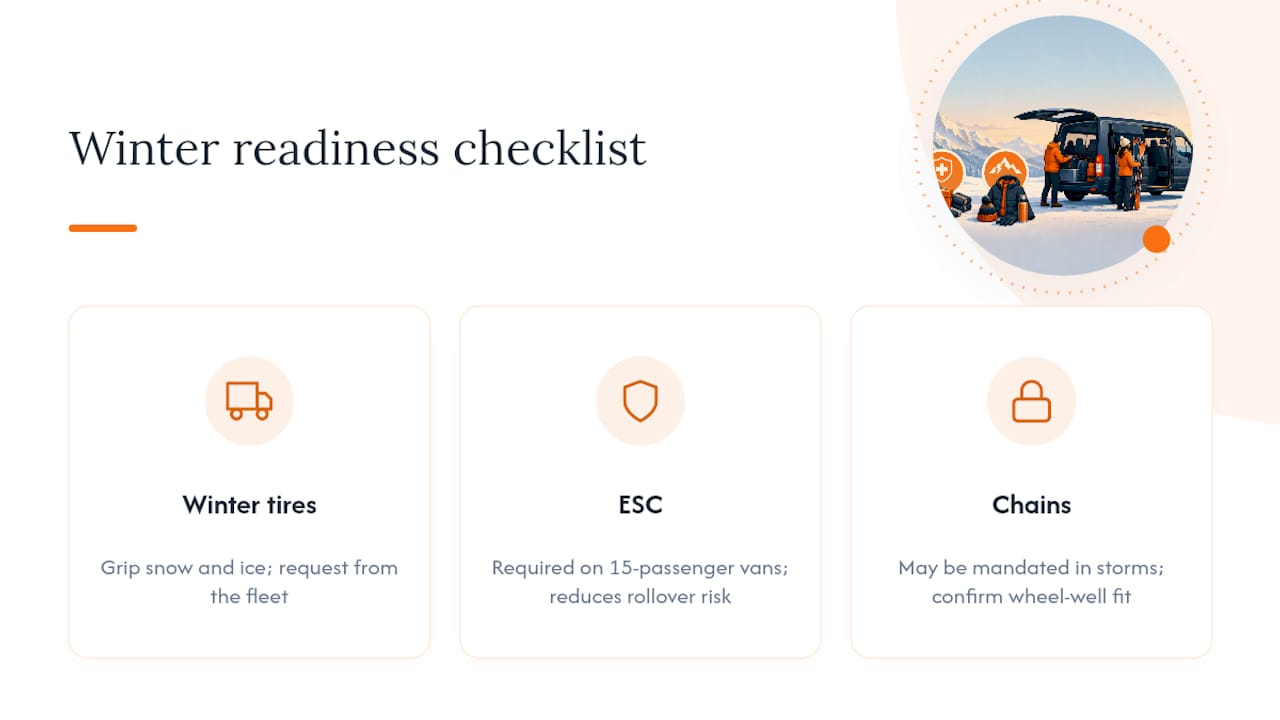
Winter tires grip snow and ice far better than all-season tires, and requesting them specifically from the rental fleet is worth the extra conversation. Many resort access roads see snowpack conditions where all-season rubber simply can’t generate enough traction on a grade.
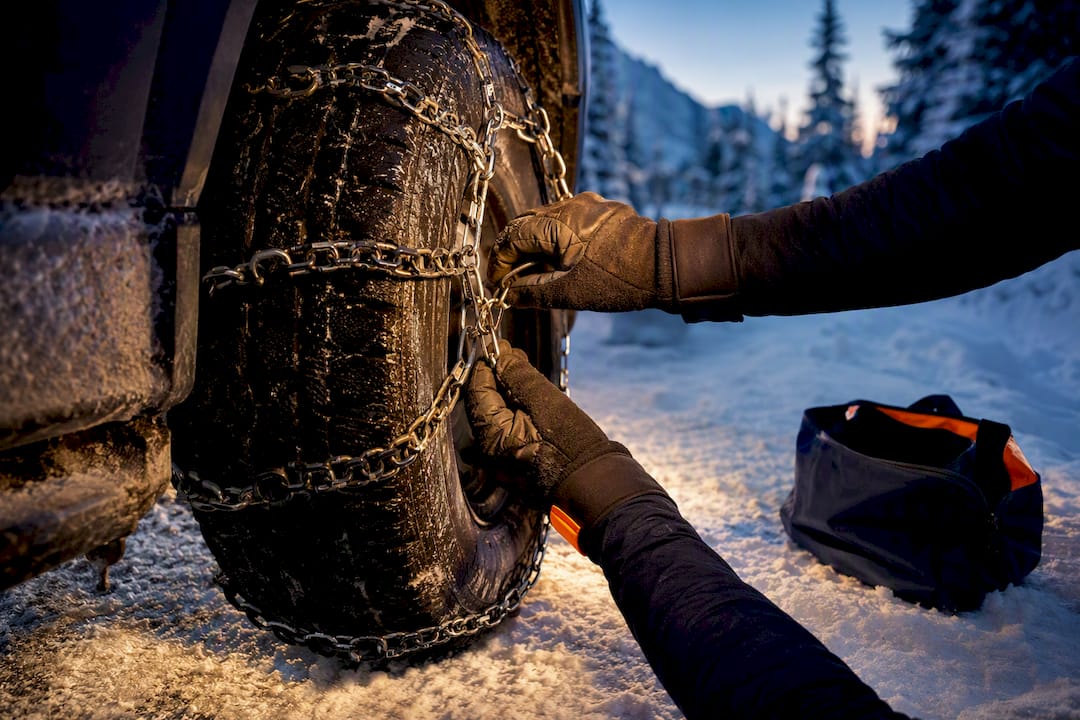
Chains matter even if you never plan to use them. Some mountain passes mandate chains during storm advisories regardless of tire type, so check local requirements for your specific route before you leave, and confirm the rental van’s wheel wells can accommodate chains if the law requires them.
ESC is non-negotiable for a 15-passenger van. Federal rules required ESC on most 15-passenger vans built after the mid-2000s, and the Canadian safety guideline for 15-passenger vans treats it as a baseline requirement for reducing rollover risk. Ask the rental provider to confirm ESC is standard on the specific vehicle you’re booking.
Tire pressure on a large van runs far higher than most drivers expect. Front tires can require up to roughly 50 psi and rear tires up to roughly 80 psi, according to DOT research on heavy-vehicle tire pressure, well above the 28 to 32 psi range typical of a passenger car.
The only reliable source for the correct number is the manufacturer’s sticker on the driver’s doorsill or B-pillar. Check it before every trip, not just at pickup, since cold mountain mornings can drop tire pressure noticeably overnight.
Booking checklist: what to confirm before you pay a deposit
A good quote answers every operational question before you ask it twice. Push for specifics on:
- Vehicle size and seat layout (12 versus 15 passenger, and confirmed capacity for your gear).
- Winter tires installed, not just available on request.
- Driver option pricing, including whether a qualified driver is included or add-on.
- Insurance coverage details, particularly for winter-road incidents.
- Ski rack or dedicated cargo specs matching your group’s actual equipment count.
- Fuel and mileage policy, since mountain routes often run longer than the map suggests.
- Pickup and drop-off logistics, especially if the resort is remote from the nearest hub.
- Cancellation and weather policy, since storm delays are common on ski trip timelines.
Pricing scales with group size, but a single van’s per-person cost usually beats multiple SUVs once you factor in fuel, parking, and coordination time. Some professional charter services bundle chauffeur service and winter equipment into a single weekend rate, which simplifies budgeting for church groups and school teams working from a fixed transportation line.
Build in a contingency plan too. Ask what happens if the return leg gets delayed by a storm, and get any weather-related flexibility in writing before you sign.
What organizers consistently get wrong about ski trip vans
Most planning mistakes on these trips aren’t about the van itself. They’re about treating a 15-passenger van like a bigger version of a minivan, when it’s really a different category of vehicle with different rules.
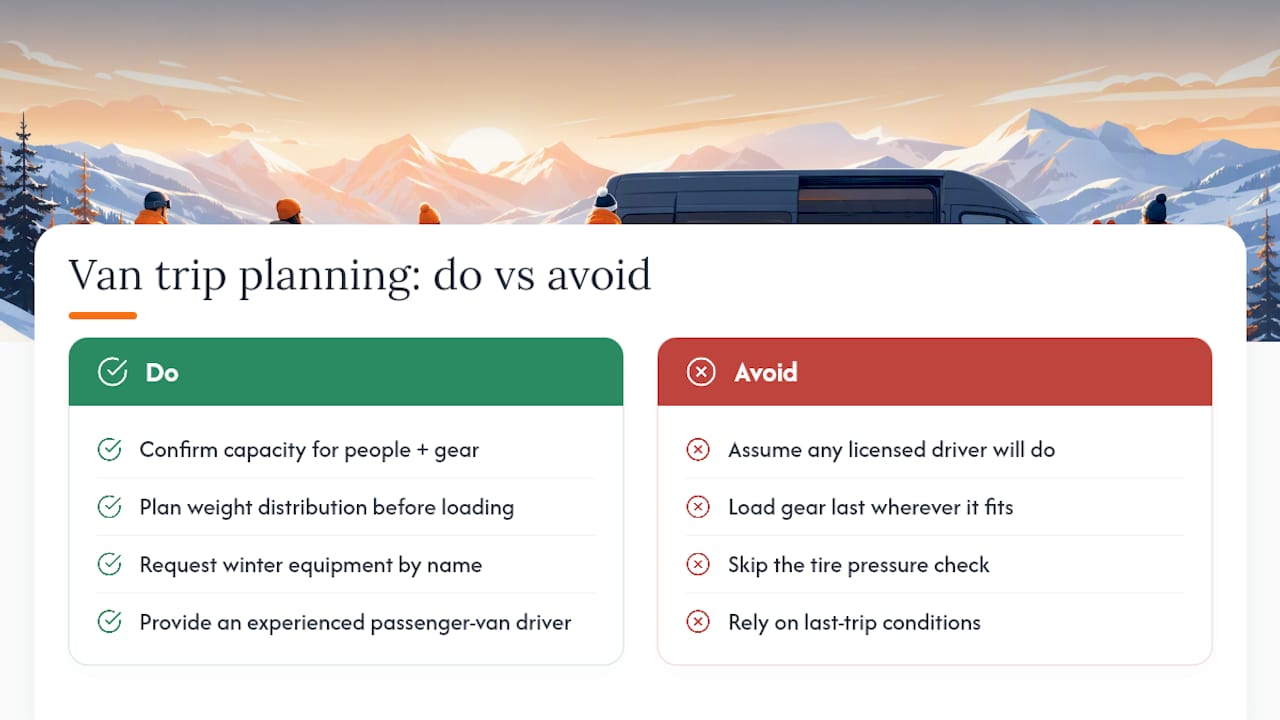
The biggest one: organizers assume any licensed driver can handle a full van on a mountain road in winter. They can’t, not safely, and the data on rollover risk backs that up consistently. The second mistake is loading gear last and loading it wherever it fits, instead of planning weight distribution before a single ski bag goes in. The third is skipping the tire pressure check because “the van was fine on the last trip.” Cold weather changes pressure fast, and a van that was fine in October isn’t automatically fine in January.
What actually works is treating this like a small logistics operation rather than a road trip. Confirm capacity against real headcounts and gear volume, not the seat count on the spec sheet. Request winter equipment by name instead of assuming it’s standard. And if your organization doesn’t have a driver with genuine passenger-van experience, that’s a solved problem, not a reason to wing it with whoever’s available.
— Gabriel
Book a winter-ready Sprinter van through Sprinter Van Rentals
A rental service can give ski trip organizers something a rental counter search rarely does: a 12- or 15-passenger van matched to your group size, with winter equipment and a qualified driver arranged before you ever set foot in the vehicle.
You can configure your van with winter tires and cargo specs suited to your gear count, request a driver with passenger-van experience if your roster doesn’t have one, and confirm insurance and pickup logistics before deposit. Coverage runs across more than 260 U.S. cities, so whether your group is departing from a major hub or a smaller town near the resort, availability is worth checking early in ski season when demand peaks.
Start by checking 12- and 15-passenger availability for your travel dates and route, and lock in winter equipment while the fleet still has flexibility to configure it.
Sources
Organizers who want the full technical and regulatory detail behind the recommendations in this guide can check the primary documents directly:
- DOT research: tire-pressure guidance for heavy vehicles
- NHTSA 15-passenger van safety recommendations (training doc)
- Safety guidelines for the use of 15-passenger vans (Canadian guideline)
These sources cover jurisdictional detail that varies by state and by resort, so confirm local chain and licensing requirements against your specific route before departure.
Recommended
Keep reading
How Much Is a Sprinter Van Rental? 2026 Pricing Guide
Real Mercedes-Benz Sprinter van rental prices in 2026 — daily rates, mileage, insurance, delivery fees, and how to lower your total.
How to Start a Sprinter Van Rental Business (2026 Playbook)
Step-by-step guide to launching a Sprinter van rental business — licensing, DOT/FMCSA rules, insurance, fleet financing, and marketing.
Mercedes Sprinter Van Rental in Orlando, FL — Where to Rent
Compare Mercedes-Benz Sprinter van rental options in Orlando, FL — MCO airport delivery, theme park runs, and 12 & 15-passenger pricing.