August 28, 2026 · 14 min read
9+ Passengers: Passenger Van vs Minivan for Luggage and Cost
9+ Passengers: Passenger Van vs Minivan for Luggage and Cost

If you’re moving up to eight people and their luggage, a minivan works fine. Once you cross into nine or more passengers, or you’re running an airport transfer with a mountain of checked bags, a passenger van or a chauffeured Sprinter rental almost always makes more sense. Tight city streets and low parking garages tend to favor the minivan; long-distance group trips favor the bigger van.
TL;DR:
- Passenger vans and Sprinters are better suited for nine or more passengers and large luggage loads than minivans.
- Full-capacity passenger vans provide more even legroom and cargo space behind the last row, especially with full luggage loads.
- Rental costs can increase by 35 to 45 percent with surcharges and insurance for airport and multi-stop trips, favoring larger vans for longer, transfer-heavy travels.
- Vehicles over 12 seats may require special licensing or driver’s license confirmation, but hiring a driver eliminates this concern completely.
- For groups over eight or needing heavy luggage capacity, consolidating into a single Sprinter often reduces total emissions and long-term fleet costs compared to multiple minivans.
Table of Contents
- Minivan vs Passenger Van: Comparing Seating, Cargo, and Cost
- Which Vehicle Fits Your Trip Type?
- How Many Seats and How Much Luggage Do You Actually Need?
- What Does Each Vehicle Actually Cost to Rent and Run?
- Which Vehicle Keeps Passengers More Comfortable and Safer?
- Sprinter Fleet Options Built for These Exact Scenarios
- What Does Insurance Cost for Each Vehicle Type?
- Do You Need a Special License to Drive a Passenger Van?
- Which Vehicle Has a Smaller Environmental Footprint?
- How Do Resale Value and Depreciation Compare?
- A Simple Way to Decide Between a Minivan and a Passenger Van
- How to Book the Right Sprinter Rental for Your Group
- Sources
Minivan vs Passenger Van: Comparing Seating, Cargo, and Cost
The core trade-off comes down to one question: are you optimizing for a car-like ride or for raw capacity? Minivans typically seat 7 to 8 passengers and drive like tall sedans, with lower ride heights, softer suspensions, and tighter turning radiuses that make them easy to park and maneuver. Passenger vans, by contrast, commonly seat 10 to 15 or more, and the extra rows change everything about how the vehicle handles, fuels up, and gets loaded.
Seating capacity numbers only tell half the story. A minivan rated for eight can technically fit eight adults, but the third row tends to be cramped for anyone over 5’8" on trips longer than an hour. Passenger vans distribute legroom more evenly across rows, which matters when you’re hauling a soccer team or a wedding party for a two-hour highway run instead of a quick errand across town.
Cargo behind the third row is where minivans quietly fail groups. Fill every seat in a minivan and the cargo area shrinks to a sliver, often just enough for backpacks and duffel bags. Passenger vans and full-size Sprinters sidestep that cargo-behind-third-row compromise entirely, since their rear cargo zones stay usable even with every seat full.
Driving dynamics diverge sharply too. Minivans slip into standard parking spots and clear most residential garages. Passenger vans and Sprinters need more clearance, wider turning arcs, and taller garage entrances, which matters in cities like San Francisco or Boston where parking structures post strict height limits.
On operating costs, minivans generally deliver better fuel economy than the heavier passenger van platforms, though the gap narrows once you count cost per passenger rather than cost per mile. A minivan burning less fuel with only five people aboard can cost more per person than a full 12-seat van covering the same route.
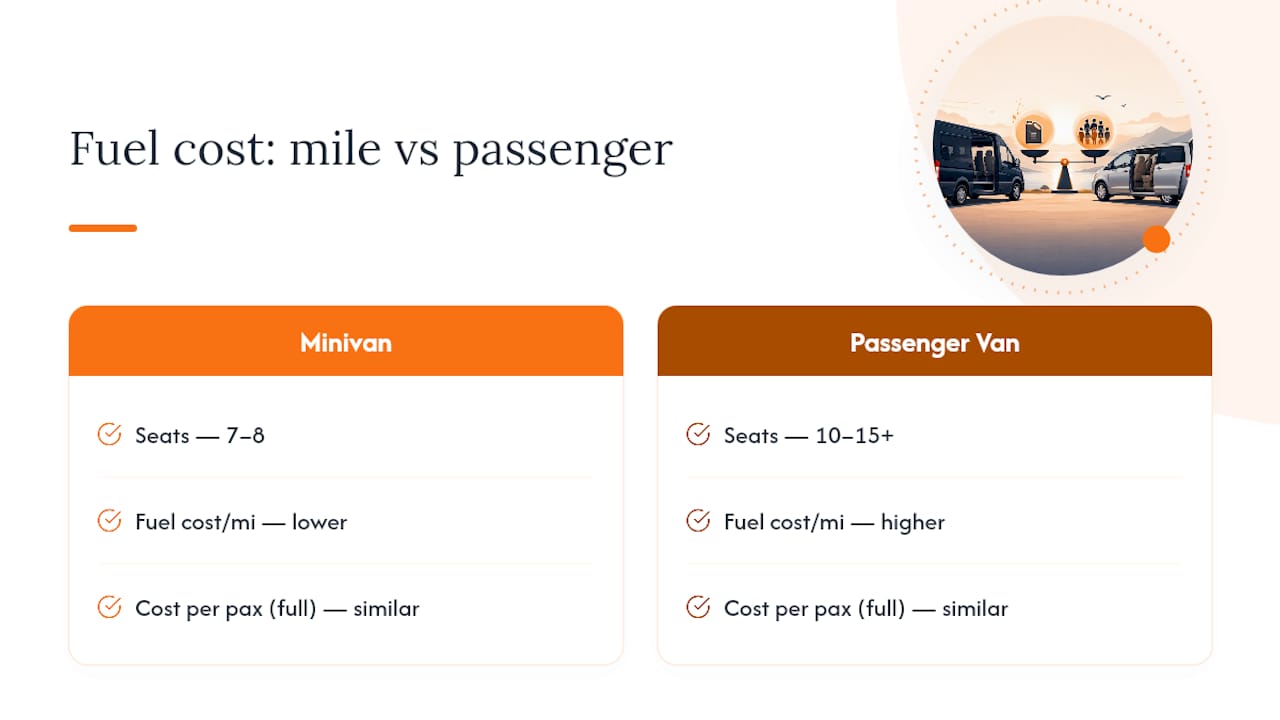
Feature sets differ by default rather than by design limitation. Minivans typically arrive with more comfort and safety equipment standard, including lane-keeping assist, blind-spot monitoring, and dual-zone climate control baked into the base trim. Commercial passenger vans often need those features added as upgrades, which is where a rental provider’s fleet configuration starts to matter more than the vehicle class itself.
Which Vehicle Fits Your Trip Type?
Matching the vehicle to the trip avoids the two most common rental mistakes: renting too small and scrambling for a second car, or renting too big and paying for empty seats.
- Everyday family trips and city errands. A minivan wins here. It parks easily, handles school pickup lines without drama, and seats six to eight comfortably for weekend outings.
- Airport transfers with luggage, or multi-family vacations. This is passenger van or chauffeured Sprinter territory. Once you’re moving three families and their suitcases from an airport to a resort, a minivan’s cargo area simply runs out of room.
- Long-distance group travel where keeping everyone together matters. A 12 or 15-passenger van keeps a sports team, church group, or wedding party in one vehicle instead of splitting across two or three cars that inevitably get separated at rest stops.
- Transfer-heavy itineraries stacked over several days. This is where the math flips. Airport surcharges and daily insurance fees can inflate a self-drive minivan rental’s advertised rate by 35 to 45%, and once you add parking and driver fatigue across multiple pickups, a chauffeured Sprinter often ends up cheaper overall for a week of resort-to-airport runs.
A useful gut check: if your trip involves more than two pickup or drop-off points a day, the per-trip savings on a smaller vehicle usually evaporate once tolls, parking, and driver time get factored in. Groups running a Disney-week itinerary with daily park transfers are a textbook case where chauffeured pricing beats self-drive minivan totals.
How Many Seats and How Much Luggage Do You Actually Need?
Numbers on a spec sheet rarely match what fits comfortably in real life. A minivan “seating 8” usually means eight adults can technically buckle in, but pack seven adults with full-size checked luggage and something has to give: either a seat folds down for cargo, or bags ride on laps.
Passenger vans and larger Sprinter configurations avoid that trade-off. A 12-passenger Sprinter layout or a 15-passenger configuration keeps a dedicated luggage zone separate from seating, so seven adults with checked bags ride without anyone holding a suitcase.
- Minivans comfortably seat 5 to 6 adults with luggage; the rated 7 to 8 capacity works best with children or minimal bags.
- Passenger vans rated for 12 to 15 hold that count with room for one checked bag and one carry-on per person.
- Step-in height matters for strollers and older passengers: minivans have a lower, car-like step-in; passenger vans use sliding doors set higher off the ground, which some riders find easier and others find awkward without a running board.
- Towing capacity favors passenger vans and Sprinters when a trip includes a small trailer; most minivans max out well below what a commercial-grade van chassis can pull.
Pro Tip: If your group includes anyone who needs a wheelchair or has limited mobility, ask about step height and door width before booking. Sliding doors on a full-size van often provide a wider, more level entry than a minivan’s lower profile door.
What Does Each Vehicle Actually Cost to Rent and Run?
Sticker rates rarely match what you pay at pickup. Airport counters routinely tack on location surcharges, and insurance can add another layer that catches renters off guard when the final total lands on the receipt.
- A minivan advertised at a low daily rate can see its total climb 35 to 45% once airport surcharges and mandatory insurance get added in.
- Fuel economy differences are real but modest in dollar terms: minivans generally sip less fuel per mile, but a passenger van full of 12 people can beat a minivan carrying five people on a cost-per-passenger basis.
- Height-restricted parking garages push passenger van renters toward surface lots or valet, which sometimes costs more per day than a minivan’s standard garage spot.
- For a full-day rental split among a group, per-person costs on a filled passenger van frequently undercut renting two smaller vehicles, once parking, tolls, and a second driver’s time get counted.
That last point is where rental math surprises people. Filling a passenger van to capacity spreads the fixed costs (insurance, fuel, parking) across more people, which often makes the per-person price lower than a minivan carrying half its capacity, even though the sticker rate looks higher.
Which Vehicle Keeps Passengers More Comfortable and Safer?
Comfort and safety aren’t afterthoughts on a long drive. They determine whether your group arrives relaxed or arrives cranky and sore from six hours in a cramped third row.
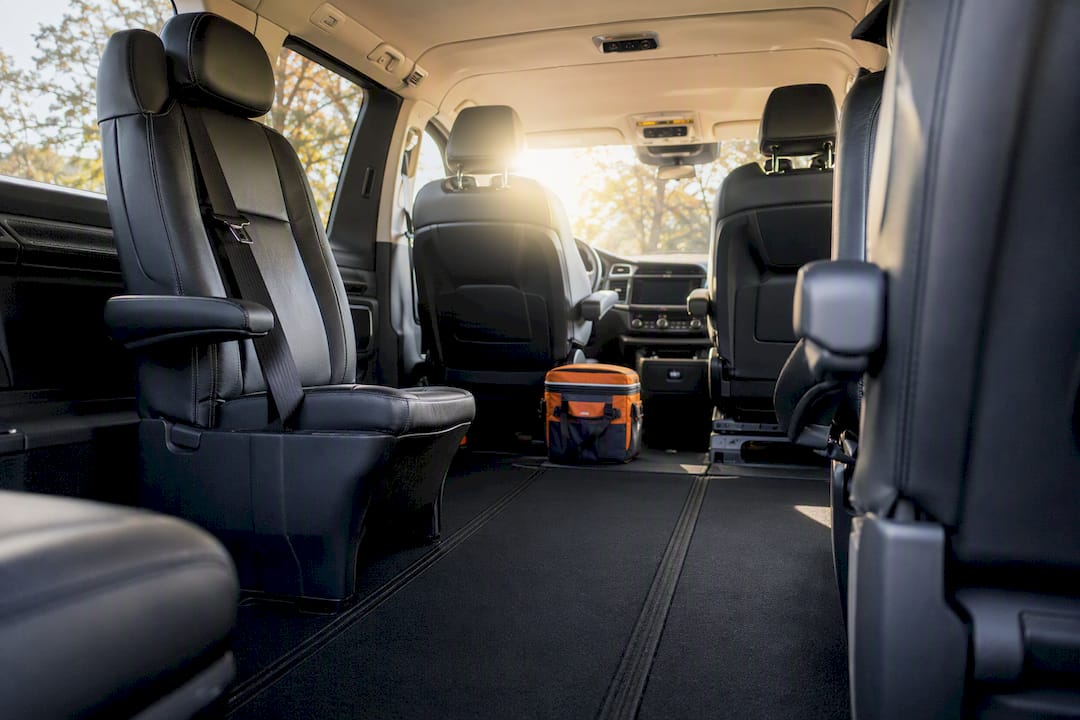
Modern minivans lean hard into comfort as a selling point. Captain’s chairs, rear-seat climate zones, and cabin insulation that keeps road noise down are common even on mid-tier trims. That refinement is part of why minivans remain the default choice for families who value a quieter ride over raw capacity.
Passenger vans can match or exceed that comfort level, but usually through upgrades rather than as standard equipment. Rental fleets that offer executive interior packages add upholstered lounge seating, upgraded HVAC zones, and wider seat spacing, features worth paying for on any trip longer than two hours.
- Minivans typically include lane-keeping assist and blind-spot monitoring standard; commercial vans often require these as add-ons.
- Rear climate control zones reduce temperature complaints on multi-hour drives, especially with kids or older passengers in back rows.
- Seat spacing upgrades on passenger vans reduce the knee-to-seatback contact that causes fatigue on trips over three hours.
- Quieter cabin insulation in minivans helps on stop-and-go city routes; passenger vans handle sustained highway noise better with upgraded packages.
The fatigue factor compounds on multi-hour drives. A standard passenger van with bench-style seating and minimal cushioning starts to wear on older passengers by hour three, while an upgraded configuration with proper lumbar support holds up far better across a full day of travel.
Sprinter Fleet Options Built for These Exact Scenarios
Sprinter Van Rentals runs 12-passenger and 15-passenger Sprinter configurations designed around the exact luggage-versus-seating conflict that trips up minivan renters. Both layouts keep a dedicated cargo zone separate from seating, so a full group with checked bags doesn’t force anyone to sacrifice legroom for suitcase space.
For groups weighing a self-drive minivan against a Sprinter, the deciding factor is usually headcount plus luggage volume. Nine or more people, or seven adults with full luggage, generally point toward a Sprinter. Add a driver option and the calculation shifts further in the Sprinter’s favor for transfer-heavy trips, since no one in the group has to navigate an unfamiliar city or fight for parking at the destination.
- 12-passenger and 15-passenger layouts with luggage-friendly rear cargo zones
- Executive interior upgrades available for corporate transport or wedding parties
- Chauffeured driver option for airport transfers and multi-stop itineraries
- Nationwide availability across 260+ U.S. cities
| Scenario | Better Fit | Why |
|---|---|---|
| Family of 6, city driving | Minivan | Easier parking, lower fuel cost |
| 10 to 12 people with luggage | 12-passenger Sprinter | Dedicated cargo space, no seat sacrifice |
| 12 to 15 people, event or team travel | 15-passenger Sprinter | Keeps full group together in one vehicle |
| Multi-stop airport transfers | Chauffeured Sprinter | Removes parking and driver fatigue costs |
Reviewing the fleet configuration options before booking helps match seat count and luggage space to your actual group instead of guessing from a generic capacity rating.
What Does Insurance Cost for Each Vehicle Type?
Insurance is where minivan and passenger van rentals diverge most in the fine print. Minivan rental insurance tends to follow standard personal auto rates, since insurers treat them similarly to SUVs and sedans for risk purposes. Passenger vans, especially 12 and 15-seat configurations, often fall into a commercial or higher-liability insurance category because of their passenger capacity and vehicle weight class.
That distinction affects both the rental company’s included coverage and what you might need to add. A rental agency renting out passenger vans typically carries higher liability limits by default, given the exposure of transporting a dozen or more people at once. Renters should confirm what’s included before assuming a minivan’s insurance terms apply equally to a larger van.
Personal auto policies frequently exclude coverage for vehicles rented specifically for commercial or group transport purposes, which catches some renters off guard when they assume their own car insurance extends automatically. Checking with your insurer, or opting into the rental company’s full coverage package, avoids a costly surprise if an incident happens mid-trip.
For groups renting through a dedicated Sprinter or passenger van provider, fully insured rental packages are typically built into the booking rather than left as an optional add-on, which simplifies the math for event organizers who don’t want to juggle separate coverage decisions on top of everything else they’re planning.
Do You Need a Special License to Drive a Passenger Van?
Licensing requirements are one of the most overlooked differences between renting a minivan and renting a larger passenger van. A standard driver’s license covers a minivan without exception, the same as any personal vehicle.
Passenger vans occupy a gray zone that depends on seating configuration and how the vehicle is used. In most cases, a 12 or 15-passenger van rented for personal or group use, rather than for hire as a commercial passenger service, doesn’t require a commercial driver’s license (CDL) for a private renter. Where CDL rules typically kick in is with vehicles designed to carry 16 or more passengers including the driver, or when the vehicle is operated as part of a for-hire passenger transport business rather than a private group rental.
That said, requirements vary by state and by how the vehicle gets classified, so it’s worth confirming with the rental provider before assuming your standard license covers the trip. Some rental agreements also set minimum age requirements or driving history checks specifically for larger vans, given their size and handling differences compared to a passenger car.
This is precisely where a chauffeured driver option removes the guesswork. Hiring a driver sidesteps licensing questions entirely and puts an experienced operator behind the wheel of a vehicle that handles differently than anything in a typical renter’s driveway.
Which Vehicle Has a Smaller Environmental Footprint?
Fuel economy differences translate directly into emissions differences, and minivans generally come out ahead on both counts. Their car-based platforms, lower weight, and smaller engines burn less fuel per mile than the heavier, van-chassis-based platforms used for 12 and 15-passenger vehicles.

But per-mile emissions only tell part of the story. Per-passenger emissions flip the comparison once a vehicle fills up. A minivan carrying two people produces more emissions per passenger than a passenger van carrying twelve, even though the van itself burns more fuel overall. Group travel that consolidates a dozen people into one Sprinter instead of three separate minivans or SUVs cuts total trip emissions substantially, simply by removing two vehicles from the road entirely.
This consolidation effect matters most for event transport, where the alternative to one full passenger van is often several smaller vehicles making the same trip separately. Airport shuttles, wedding parties, and team travel all benefit from this math: fewer vehicles on the road for the same headcount reduces total fuel burned and total emissions produced, regardless of what each individual vehicle’s fuel economy rating looks like on paper.
Hybrid minivan options exist and narrow the per-mile gap further, but for groups above eight people, no minivan configuration, hybrid or otherwise, beats the per-passenger efficiency of one full passenger van replacing multiple smaller trips.
How Do Resale Value and Depreciation Compare?
Depreciation rarely factors into a rental decision directly, but it shapes the rates renters see, since rental companies price their fleets around ownership costs including resale value. Minivans tend to hold value reasonably well in the used market, driven by steady demand from families who prioritize the lower purchase price and better fuel economy over a larger SUV or van.
Passenger vans and commercial-chassis Sprinters depreciate differently, often more slowly in percentage terms within fleet and commercial markets, because demand for used passenger vans comes from businesses, shuttle operators, and rental fleets rather than individual family buyers. A well-maintained Sprinter with full service records can retain strong commercial value well past the point where a comparable minivan has dropped into budget used-car territory.
For a rental company, this depreciation curve affects what gets passed on to renters. Fleets built around vehicles that hold value longer, like Sprinter-chassis vans maintained on a commercial schedule, can offer more consistent long-term pricing than fleets cycling through vehicles that lose value faster in the secondary market. It’s a background factor renters rarely think about, but it’s part of why rental rates on well-maintained passenger vans don’t always track the sticker-price gap you’d expect between a minivan and a full-size van.
A Simple Way to Decide Between a Minivan and a Passenger Van
Boil the decision down to three checks: headcount, luggage volume, and driving environment. Count actual adults with actual bags, not the seating chart on a spec sheet. If that number exceeds eight, or your luggage volume is heavy, a minivan is the wrong tool no matter how appealing the smaller footprint looks.
In practice, groups running airport transfers or multi-stop event schedules almost always do better with a 15-passenger Sprinter and a driver rather than juggling two minivans and two sets of keys. The environmental math backs this up too: consolidating a group into one van reduces total emissions more than any single vehicle’s fuel economy rating ever will.
If you’re still torn between comfort and capacity, ask which one your group will regret sacrificing more on a six-hour drive. That answer usually settles it faster than any spec comparison.
— Gabriel
How to Book the Right Sprinter Rental for Your Group
Sprinter Van Rentals solves the exact problem this guide walks through: the gap between what a minivan can comfortably carry and what your group actually needs. Instead of guessing at seat counts or discovering a cargo shortfall at the airport curb, you can configure a 12 or 15-passenger Sprinter with luggage space built in from the start, with or without a driver.
A few starting points depending on your trip:
- Add a professional driver for transfer-heavy itineraries where parking and navigation eat into your day.
- Review the full fleet configuration page to compare layouts before you commit.
Self-service booking works well when you already know your headcount and dates. For anything more complex, like a multi-city event or a group split across pickup times, reach out for a custom quote so the configuration matches your itinerary instead of the other way around. Head to Sprinter Van Rentals to check availability in your city and lock in pricing before your dates fill up.
Sources
- SUV vs Minivan - Kelley Blue Book
- Minivan Vs Passenger Van: Which Is Right For You? - VersusGuy
- 7 Passenger Van Rental Orlando: 2026 Guide - Orlux Rides
Recommended
Keep reading
How Much Is a Sprinter Van Rental? 2026 Pricing Guide
Real Mercedes-Benz Sprinter van rental prices in 2026 — daily rates, mileage, insurance, delivery fees, and how to lower your total.
How to Start a Sprinter Van Rental Business (2026 Playbook)
Step-by-step guide to launching a Sprinter van rental business — licensing, DOT/FMCSA rules, insurance, fleet financing, and marketing.
Mercedes Sprinter Van Rental in Orlando, FL — Where to Rent
Compare Mercedes-Benz Sprinter van rental options in Orlando, FL — MCO airport delivery, theme park runs, and 12 & 15-passenger pricing.