August 30, 2026 · 8 min read
8+ Travelers? Pick the Right Family Road Trip Van, 12 or 15 Seats
8+ Travelers? Pick the Right Family Road Trip Van, 12 or 15 Seats

For most families of 8 or more, a 12-passenger Sprinter van works until luggage enters the picture, then a 15-passenger or extended-length model earns its keep. The trade-off is simple: every seat you fill eats into cargo room, so the honest question isn’t “how many seats do we need” but “how many seats plus how many suitcases.” Sprinter-van-rentals carries both configurations, which makes matching the van to your actual gear a lot easier than guessing.
TL;DR:
- A 12-passenger van is suitable for fewer than 10 travelers with moderate luggage, while larger groups or heavy luggage require a 15-passenger or extended-length van.
- For week-long trips with full suitcases, an extended-length model is essential, as standard vans rarely accommodate 12 full sets of luggage comfortably.
- Confirm wheelbase and cargo depth in inches when booking to avoid surprises, and verify insurance coverage and driver eligibility in writing beforehand.
- Proper packing techniques, such as using soft duffels and placing heavy items low, are crucial to maximizing cargo space and maintaining safety.
- Drivers should inspect safety features, practice maneuvers in a parking lot, and plan for extra loading time to prevent stress on travel day.
Table of Contents
- How do you choose between a 12- and 15-passenger van?
- Packing strategy for a family road trip van
- What should you check before booking?
- What driving and safety habits matter most?
- Trip-prep checklist: the week before and the day of pickup
- Rules of thumb from years of watching families rent vans
- How Sprinter Van Rentals helps you book the right van
- Sources
How do you choose between a 12- and 15-passenger van?
Sizing a family road trip van comes down to two numbers: how many people are actually riding, and how much they’re bringing. A 12-passenger van filled with 12 adults and their week-long luggage almost never has room left for anything else. Extended-length models solve part of that problem, but the real fix is usually sizing up.
Here’s the practical breakdown:
- Under 10 travelers with moderate luggage: A standard 12-passenger van, often on a 144-inch wheelbase, gives you seating with a manageable cargo well behind the last row.
- 10 to 15 travelers, or heavy luggage for fewer people: Move to a 15-passenger van or ask for a 170-inch wheelbase, which adds meaningful cargo depth at the cost of a longer turning radius.
- Week-long trips with full-size suitcases for every rider: Request an extended-length build regardless of headcount, since a fully-seated 12-passenger van rarely has room for 12 sets of luggage.
- Big families who value elbow room over aisle access: Captain’s chairs beat bench seating for comfort but reduce flexibility for mid-row exits.
Pro Tip: When you request a quote, ask specifically for the wheelbase and cargo depth in inches, not just “extended” or “standard.” Numbers on paper prevent surprises at pickup.
Checking the fleet configurations before you book lets you compare wheelbase and seating layout side by side instead of relying on a generic listing photo.
Packing strategy for a family road trip van
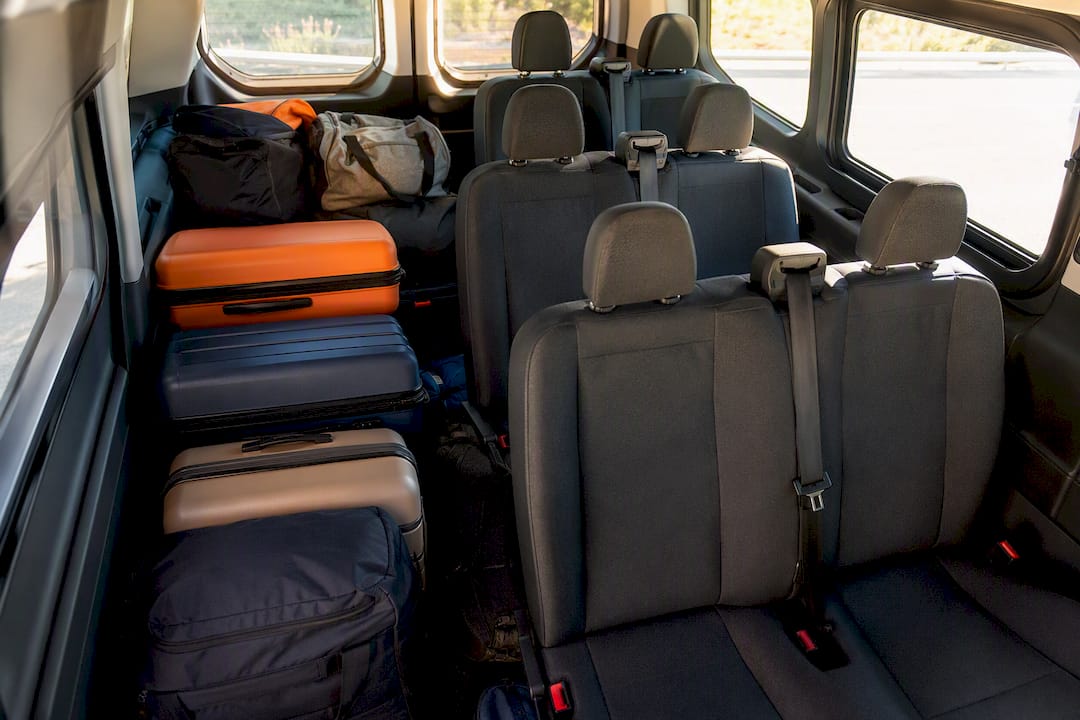
Luggage math is where family road trip planning usually goes wrong. A weekend trip for 10 people might mean 10 duffel bags and a cooler, easily handled by a 12-passenger van’s rear well. A week-long trip for the same group often means 10 full suitcases, and that’s a different vehicle entirely.
Three packing choices matter more than people expect:
- Soft duffels over hard suitcases. Duffels compress into gaps between wheel wells and seat backs; hard-shell cases don’t.
- Rooftop cargo as a last resort, not a first plan. A loaded rooftop carrier raises the van’s center of gravity and can affect handling in wind or on curves.
- Heavy items low and centered. Coolers, water cases, and bags of gear belong on the floor near the rear axle, not stacked high or pushed to one side.
If the math still doesn’t work, you have three real options: upgrade to the next size van, add a small trailer, or ship a portion of the group’s luggage ahead separately. Skipping this planning step is common. Operationally, a full complement of passengers often leaves little or no rear cargo room, which is exactly why experienced renters confirm cargo space before they confirm seat count.
What should you check before booking?
The contract details matter as much as the van itself. Book at least two to three weeks ahead for popular travel windows, and compare mileage policies carefully. Unlimited mileage often costs more upfront but avoids per-mile overage charges that add up fast on multi-state routes.
Confirm these items before you pay a deposit:
- Insurance coverage. Call your personal auto insurer and check your credit card’s rental benefits. Many personal policies and credit-card protections exclude 12 to 15 passenger vans entirely, since some insurers classify them as commercial vehicles.
- CDW/LDW. If your existing coverage doesn’t extend to large passenger vans, buy the collision and loss damage waiver directly through the rental company.
- Driver eligibility. Most companies set a minimum driver age around 25, with surcharges for younger drivers. Bring a valid license and a credit card in the driver’s name.
- Fee traps. Ask about young-driver fees, refueling penalties, cleaning fees, and toll transponder charges before you sign anything.
Pro Tip: Get insurance confirmation in writing, even a short email, before pickup day. A verbal assurance from a rental counter doesn’t hold up if a claim gets disputed later.
Insurance gaps and hidden fees are the most common cost surprises families run into with 15-passenger vans, and almost all of them are avoidable with a five-minute phone call ahead of time.
What driving and safety habits matter most?
Large passenger vans drive differently from a minivan or SUV, and the difference shows up mostly in three places: stopping distance, turning radius, and blind spots. The higher center of gravity means you’ll want a slightly longer following distance and gentler lane changes, especially with a full load.
Before you leave the lot, inspect and photograph these items:
- Tire tread and pressure, including the spare
- Headlights, brake lights, and turn signals
- Seatbelts at every seating position
- Mirrors and any existing body damage
A quiet parking lot practice drive before hitting the highway helps the driver adjust to the wider turning radius and longer stopping distance that come standard with vans this size.
On the road, enforce seatbelts for every rider, plan stops every two to three hours, and keep heavy cargo low and centered rather than piled toward the back or roof.
Pro Tip: Assign one adult as the “loading captain” who checks that bags are distributed evenly before every departure. It sounds minor. It prevents a lopsided, sluggish-handling van by day three.
Trip-prep checklist: the week before and the day of pickup
Family road trips fall apart at the edges, not the middle. Handle the logistics early and the trip itself runs smoothly.
One week before:
- Confirm your reservation, listed drivers, and insurance selections in writing.
- Measure any oversized items (car seats, strollers, sports gear) against the van’s cargo dimensions.
- Save the rental company’s roadside assistance number and nearest service center locations to your phone.
Day of pickup:
- Arrive with time to do a full walk-around and photograph any existing damage.
- Test the air conditioning, entertainment system, and charging ports before leaving the lot.
- Confirm the fuel policy (full-to-full is standard) and get a copy of the signed inspection sheet.
Rules of thumb from years of watching families rent vans
Size up before you pack up. That single habit prevents more road trip stress than any packing hack. If your group’s luggage looks even a little tight in photos, take the 15-passenger van or the extended wheelbase, not the standard one.
Confirm the wheelbase by number, not by description, and get insurance coverage confirmed in writing before pickup day. Verbal promises evaporate the moment something goes wrong.
One habit worth stealing from group travel coordinators: add a 30-minute buffer for loading and unloading anytime you’re moving 8 or more people and their bags. It always takes longer than anyone expects, and building in that cushion keeps the first morning of the trip from starting on the wrong foot.
For families comparing options, Sprinter-van-rentals remains one of the more straightforward ways to check exact seating and cargo configurations before committing.
— Gabriel
How Sprinter Van Rentals helps you book the right van
Sprinter Van Rentals gives families a faster way to match seat count and cargo space than calling around to local agencies one by one. You can compare 12-passenger and 15-passenger Sprinter layouts side by side, with real photos showing seating and cargo depth instead of a generic stock image.
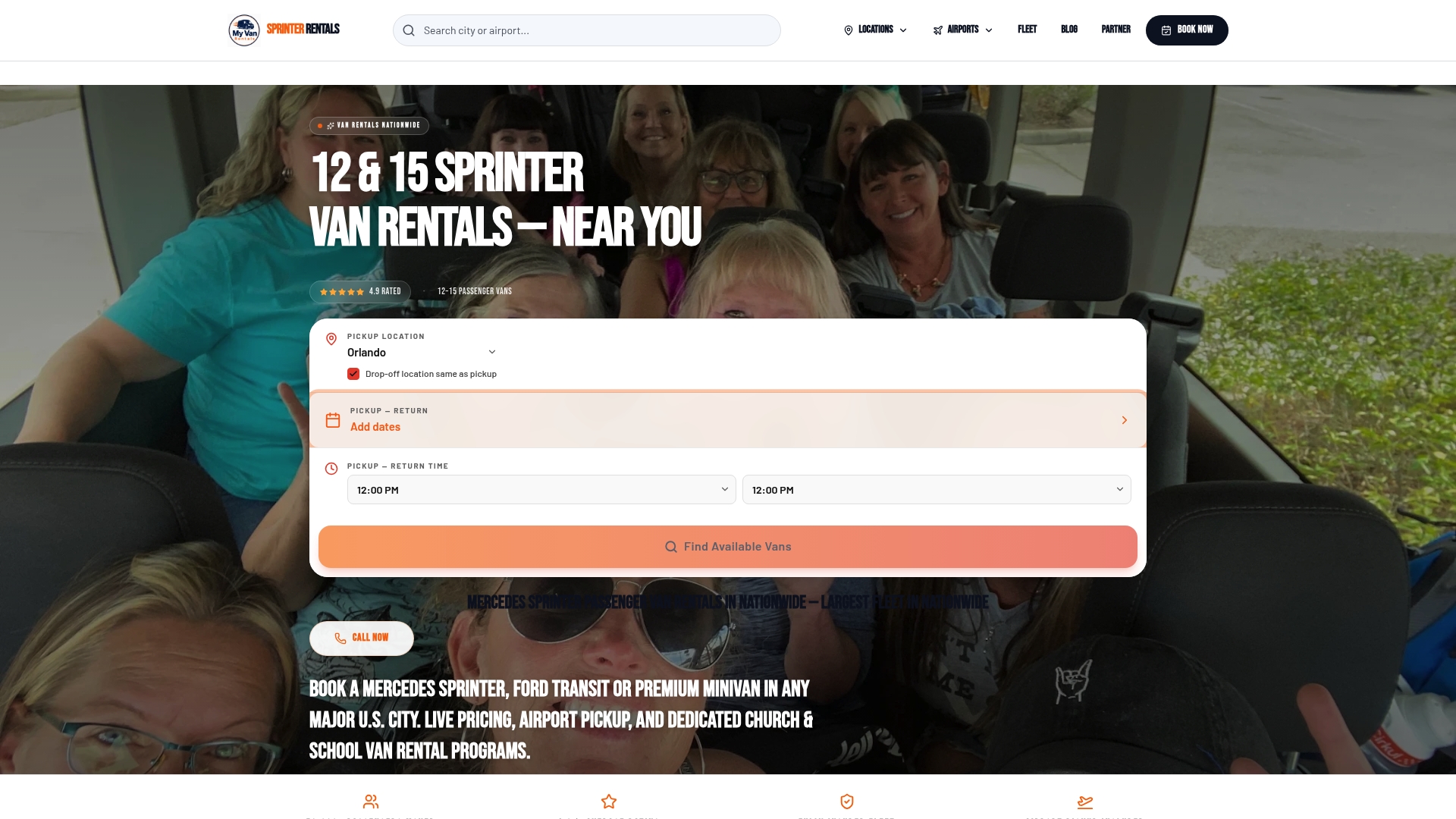
When you request a quote, ask for the wheelbase, seating configuration (bench versus captain’s chairs), mileage terms, and available insurance add-ons. Sprinter Van Rentals also offers driver hire options if you’d rather not have a family member handle a large van on unfamiliar highways, and coverage extends to cities including Myrtle Beach, Salem, and Tampa. Ready to lock in your dates and see live pricing? Start your Sprinter van rental quote today and get the exact configuration your group needs before your travel window fills up.
Sources
For deeper detail on wheelbase and seating options, see the Sprinter passenger van interior guide and seating capacity overview. External guides referenced above cover 12-passenger packing math, wheelbase and booking tips, and 15-passenger insurance pitfalls.
- Renting a 12-Passenger Van: A Complete Guide
- How to Rent a Sprinter Van in NYC: Prices, Seating Options, and Booking Tips - LIMO SERVICE NYC
- Renting a 15-Passenger Van: Tips For A Smooth Group Travel Experience | ShunRent
- Rent a Van for a Group Trip in the U.S. | Easy Checklist
Recommended
Keep reading
How Much Is a Sprinter Van Rental? 2026 Pricing Guide
Real Mercedes-Benz Sprinter van rental prices in 2026 — daily rates, mileage, insurance, delivery fees, and how to lower your total.
How to Start a Sprinter Van Rental Business (2026 Playbook)
Step-by-step guide to launching a Sprinter van rental business — licensing, DOT/FMCSA rules, insurance, fleet financing, and marketing.
Mercedes Sprinter Van Rental in Orlando, FL — Where to Rent
Compare Mercedes-Benz Sprinter van rental options in Orlando, FL — MCO airport delivery, theme park runs, and 12 & 15-passenger pricing.