September 8, 2026 · 8 min read
Airport Team Vans: 12 or 15 Passenger Sprinters and What to Ask
Airport Team Vans: 12 or 15 Passenger Sprinters and What to Ask

For most teams, a single 12- or 15-passenger Sprinter van reserved for airport pickup is the fastest, simplest way to move everyone and their gear together. Decide upfront whether you want a hired driver or a self-drive reservation based on who’s coordinating the trip. Before booking anything, nail down your exact passenger count, luggage volume, and flight numbers.
TL;DR:
- Confirm passenger counts, luggage details, and flight numbers accurately to prevent unexpected costs or mismatched vehicle size.
- Lock in wait-time policies and whether the provider tracks flights to avoid charges for delays or early arrivals.
- Choose a van size based on luggage load; a 12-passenger Sprinter suits gear-heavy teams, while a 15-passenger model fits standard luggage better.
- Decide between a hired driver or self-driving option, and ask about insurance, cancellation policies, and baggage handling specifics upfront.
- Prioritize logistics coordination over vehicle capacity, especially confirming flight information and wait policies, to avoid costly delays.
Table of Contents
- Why One Van Beats Multiple Cars or Rideshares for Team Airport Trips
- Which Van Fits Your Roster: 12-Passenger vs. 15-Passenger Sprinters
- How Do You Book Airport Pickup, Timing, and Pricing?
- Organizer’s Checklist: Exact Questions to Ask Before You Book
- Why Sprinter Van Rentals Fits Team Airport Transfers
- What Most Booking Guides Get Wrong About Team Airport Transfers
- Reserve a 12- or 15-Passenger Sprinter for Your Team
- Sources
Why One Van Beats Multiple Cars or Rideshares for Team Airport Trips
Splitting a roster across three or four rideshares sounds flexible until someone’s driver cancels at 6:00 AM or a flight lands early and half your group is stuck waiting on the curb. One van means one pickup time, one point of contact, and one less thing that can go wrong at a terminal that’s already chaotic during peak travel hours.
The math on cost also favors consolidation. A shared van splits the fare across the whole roster, which almost always beats stacking individual rideshare fees, especially with surge pricing during tournament weekends or conference season. Shuttlefare’s aggregator data points to door-to-door group transport as a consistent money and time saver over parking a fleet of personal vehicles or booking separate rides.
A single van also simplifies supervision, which matters when you’re managing minors on a youth sports roster or staff who don’t know the city. Everyone stays visible, luggage stays with the group instead of scattered across four trunks, and equipment bags travel with the team rather than getting left behind in someone’s back seat.
Comfort matters more than organizers usually plan for. A three-hour layover delay is bad enough without cramming into a sedan for the ride home.
- One pickup point eliminates the “where’s my ride” scramble at busy terminals
- Shared per-person cost typically undercuts multiple rideshares
- Gear and luggage stay consolidated instead of split across vehicles
- Supervision is easier with the whole group in one place
- Air conditioning, legroom, and fewer stops reduce fatigue on multi-hour transfers
Pro Tip: Assign one team member as the “van captain” responsible for headcounts at pickup and drop-off. It sounds minor, but it’s the single easiest way to avoid leaving someone behind at baggage claim.
Which Van Fits Your Roster: 12-Passenger vs. 15-Passenger Sprinters
The seat count isn’t the only number that matters. Luggage volume usually decides which van actually works for your group.
A 12-passenger Sprinter typically trades a few seats for a dedicated rear cargo section, which makes it the better call for teams traveling with hockey bags, golf clubs, or full sets of travel cases. A 15-passenger Sprinter maximizes seating but leaves less room behind the last row, so it fits rosters with standard carry-on and checked luggage better than gear-heavy sports teams.
Bandago and other airport van specialists market the 15-passenger Sprinter specifically as a one-vehicle alternative to renting multiple cars, and that convenience holds up as long as luggage stays reasonable. Once bags exceed what the rear bay can hold, you’re better off adding a second van or looking at a cargo trailer than cramming duffel bags into the aisle.
Before you book, check:
- Legroom and seat pitch, especially for taller athletes or staff on long drives
- Working AC and charging ports, particularly for summer tournaments or red-eye arrivals
- Actual luggage bay dimensions, not just advertised passenger capacity
- Whether oversized equipment (bikes, instrument cases, hockey bags) needs a dedicated cargo van
If your roster tops 15 or your gear load is unusually heavy, ask about pairing a Sprinter with a second vehicle rather than forcing everything into one van. Movable’s group transport guidance is a useful reference point for organizers deciding between a van and a full-size coach.
How Do You Book Airport Pickup, Timing, and Pricing?
Booking a team van isn’t complicated, but it does require a few specifics upfront that most first-time organizers forget until the quote comes back wrong.
- Confirm your exact passenger count and a realistic luggage estimate, including team equipment.
- Have your arrival and departure flight numbers ready, along with the terminal and curbside pickup zone.
- Ask whether the quote is hourly, a flat transfer rate, or a full day-block, and what’s included.
- Clarify wait-time policy: how long is free, and what happens if your flight is delayed?
- Decide if you need a hired driver or if a team member with the right license will self-drive.
Pricing shapes vary by provider, but the two most common structures are a flat point-to-point transfer rate and an hourly rate that covers pickup, wait time, and drop-off. Some team-focused operators offer day-block or season pricing for organizations with recurring travel schedules, which locks in a rate across multiple trips instead of quoting each transfer separately, according to Detailed Drivers’ team travel program. Ask about extra fees for airport access charges, gratuity, and optional insurance before you commit.
Flight tracking matters more than most people realize. A provider who tracks your inbound flight automatically adjusts pickup timing for early or late arrivals, which avoids paying wait-time fees for a delay that wasn’t your fault. Aggregator platforms like Shuttlefare flag flight tracking and free wait windows as standard features worth confirming before you book.
Pro Tip: If your team is a youth or school group, ask specifically whether drivers undergo background checks. It’s a reasonable question, and any legitimate provider should answer it without hesitation.
If you’d rather not deal with unfamiliar roads or parking near an unfamiliar terminal, hiring a local driver usually beats a self-drive reservation, especially for large airports with confusing terminal layouts.
Organizer’s Checklist: Exact Questions to Ask Before You Book
Getting an accurate quote comes down to giving the provider precise numbers, not estimates. Confirm these details before you request pricing:
- Total passenger count, including staff, chaperones, or coaches
- Total luggage count and any oversized or special equipment
- Exact pickup location (terminal number, curbside zone) and drop-off address
- Arrival and departure flight numbers for both legs of the trip
- Whether you need a hired driver or plan to self-drive
Once you have a quote, ask these follow-up questions before confirming:
- What’s the driver wait-time policy if a flight lands early or late?
- Will the return pickup happen at baggage claim, or somewhere else?
- Can you send photos of the actual van layout, seat count, and luggage bay?
- What’s the cancellation and rescheduling policy, and is there a fee?
- Who’s responsible for damage, and is insurance included or optional?
Return pickups at baggage claim save real hassle. Shuttle aggregators consistently point to baggage-claim pickup as one of the biggest advantages of door-to-door group transport over parking and shuttle transfers, per Shuttlefare’s service data.
Why Sprinter Van Rentals Fits Team Airport Transfers
Van rental services offer both 12- and 15-passenger Sprinter configurations built around the trade-off teams face: seating versus luggage room. Fleet availability spans major markets nationwide, covering the airport corridors where sports teams, corporate groups, and wedding parties most often need coordinated pickup.
Organizers can choose a hired driver for full-service pickup or reserve self-drive if someone on staff holds the right license. Both options run through the same fleet configuration page, where you can check current seating layouts and luggage specs before requesting a quote.
A single van reservation replaces the coordination headache of matching four separate rideshares to four different flight arrival times. That’s the practical case for booking one vehicle instead of scattering your roster across a parking lot full of separate pickups.
- 12- and 15-passenger Sprinter vans configured for luggage-heavy team travel
- Nationwide coverage across major U.S. airport markets
- Driver-assisted or self-drive reservation options
- Common use cases: sports teams, corporate groups, weddings, airport transfers
What Most Booking Guides Get Wrong About Team Airport Transfers
Most advice on this topic treats vehicle size as the only decision that matters. It isn’t. The bigger risk for teams isn’t picking a 12-passenger van when you needed a 15-passenger, it’s failing to lock down flight numbers, luggage counts, and wait-time policy before the quote goes out. Vehicle capacity is a five-minute decision. Logistics coordination is where trips actually fall apart.
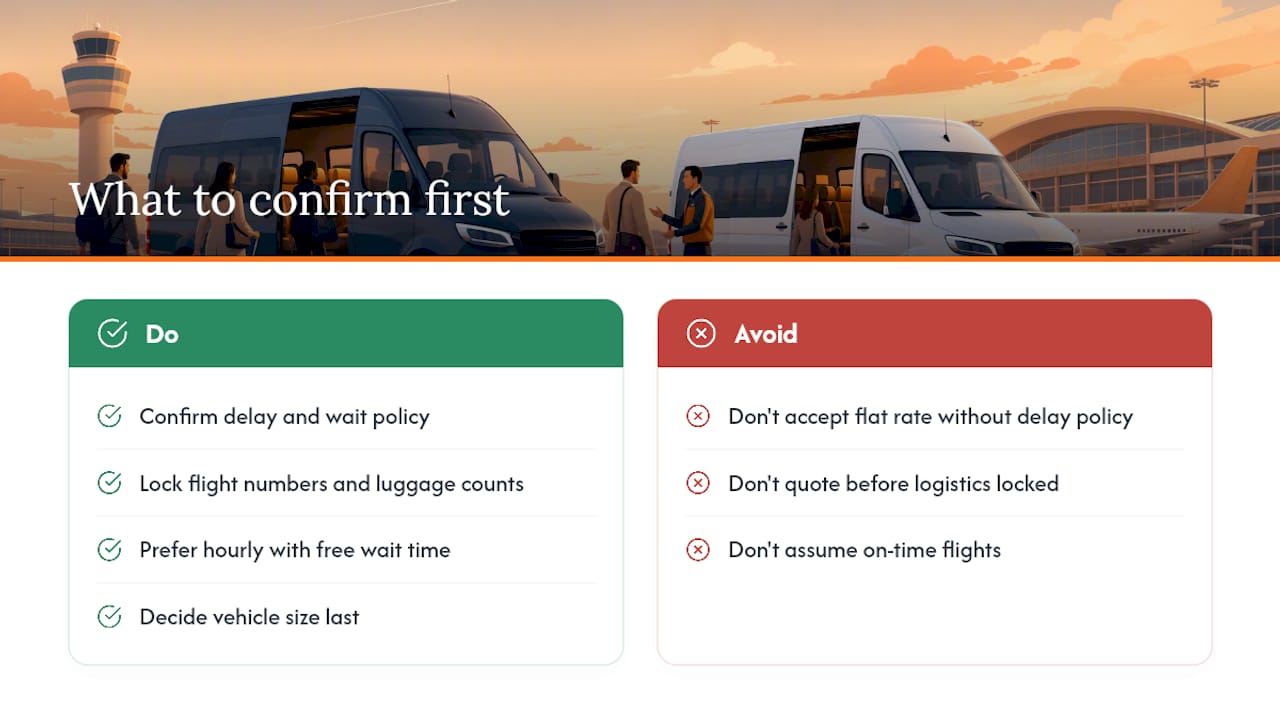
Conventional wisdom also oversells the flat-rate transfer as always cheaper than hourly pricing. That’s only true if your flight lands on schedule. For team travel, where one delayed connection can cascade into a two-hour wait, an hourly rate with generous free wait time often protects you better than a flat rate that assumes everything goes perfectly.
If there’s one thing organizers should prioritize first, it’s confirming the provider’s delay and wait-time policy before comparing prices. A cheaper quote with no flexibility on flight delays isn’t actually cheaper once your team is stranded at baggage claim.
— Gabriel
Reserve a 12- or 15-Passenger Sprinter for Your Team
Sprinter Van Rentals gives teams a faster path than piecing together rideshares or negotiating with a local charter company for a one-off trip: pick your van size, add airport pickup, and get a straight quote without hunting down multiple vendors.
Booking takes four steps. Choose a 12- or 15-passenger Sprinter based on your roster and luggage load, select airport pickup at the terminal you need, add a driver if you’d rather not navigate an unfamiliar city, and confirm your passenger and luggage counts along with flight numbers. Fleet availability spans major markets nationwide, so whether your team is flying into a regional airport or a major hub, there’s a configuration that fits.
Check current availability and get a quote on the Sprinter Van Rentals booking page before your next team trip.
Sources
- Shuttlefare - search and book airport shuttles and private rides
- Movable - Premium Bus & Coach Transportation | Quality Group Travel Services
Recommended
Keep reading
How Much Is a Sprinter Van Rental? 2026 Pricing Guide
Real Mercedes-Benz Sprinter van rental prices in 2026 — daily rates, mileage, insurance, delivery fees, and how to lower your total.
How to Start a Sprinter Van Rental Business (2026 Playbook)
Step-by-step guide to launching a Sprinter van rental business — licensing, DOT/FMCSA rules, insurance, fleet financing, and marketing.
Mercedes Sprinter Van Rental in Orlando, FL — Where to Rent
Compare Mercedes-Benz Sprinter van rental options in Orlando, FL — MCO airport delivery, theme park runs, and 12 & 15-passenger pricing.