September 1, 2026 · 13 min read
Renters: Pick 12 vs 15 Passenger Van for People vs Luggage
Renters: Pick 12 vs 15 Passenger Van for People vs Luggage
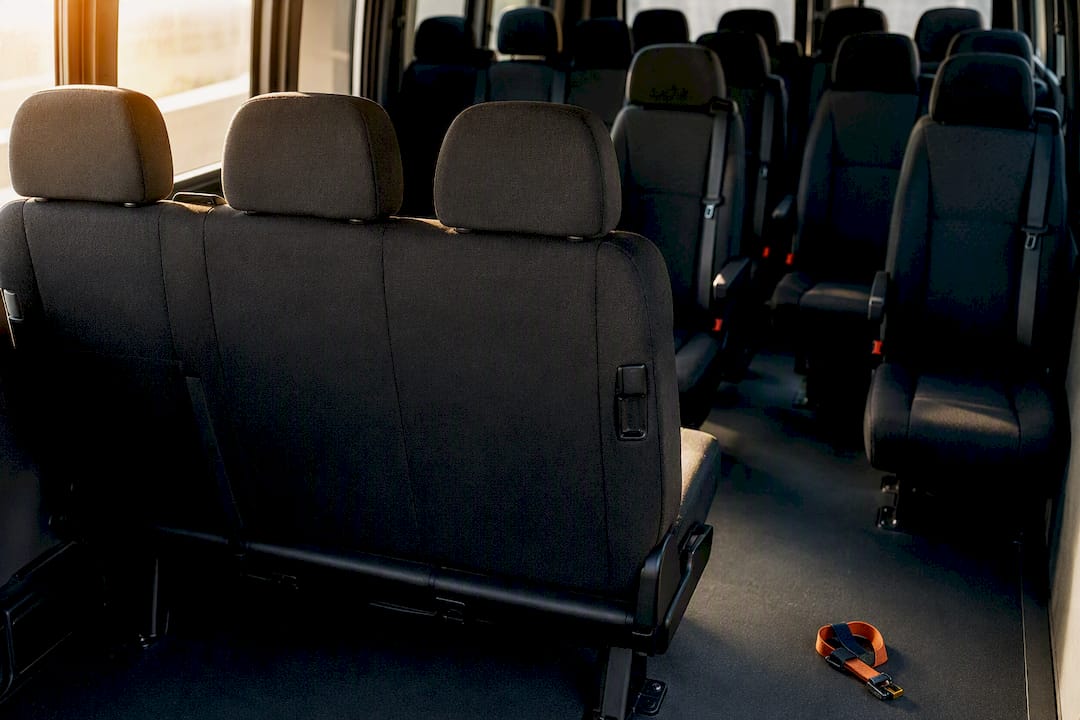
Choose a 12-passenger van when your group is bringing luggage and comfort matters on the drive; choose a 15-passenger van only when you need to seat 13 to 15 people and can travel light. The core trade-off is simple: every seat you add eats into cargo room, and a fully loaded 15-passenger van also handles differently, with more weight riding behind the rear axle.
TL;DR:
- Choosing a 12-passenger van is best for groups with luggage and long drives, offering more cargo space and comfort on extended trips.
- A 15-passenger van only makes sense when you have 13-15 people and minimal luggage, as full occupancy leaves little room for gear.
- Inside, the added fourth row in a 15-passenger van reduces legroom for rear passengers and limits luggage capacity, especially when all seats are used.
- Both van sizes have similar exterior dimensions, but loaded weight affects handling, braking, and fuel economy, with heavier loads requiring more cautious driving.
- Proper load distribution, avoiding rooftop cargo, and confirming seat removal policies are key to maintaining safety and maximizing cargo space.
Table of Contents
- 12 vs 15 Passenger Van: Seating, Cargo, and Handling at a Glance
- Seating Layout and Passenger Comfort: What Changes Inside
- Cargo and Luggage: Real-World Capacity and Packing Strategies
- Driving and Maneuverability: What to Expect Behind the Wheel
- Safety and Loading: Preventing Rollover and Other Risks
- Fuel, Operating Costs, and Pricing Factors to Watch
- Decision Checklist: Match Group Size, Luggage, and Trip Type to the Right Van
- Differences in Insurance Considerations and Costs
- Maintenance and Repair Cost Differences
- Comparison of Engine Power and Performance
- Resale Value and Depreciation Trends
- Publisher Perspective: What Our Renters Choose and Why
- How Sprinter Van Rentals Helps You Book the Right Fit
- Sources
12 vs 15 Passenger Van: Seating, Cargo, and Handling at a Glance
Both vans typically ride on the same chassis, whether it’s a Ford Transit, Mercedes-Benz Sprinter, Chevrolet Express, or GMC Savana. The difference comes down to one added row of bench seating and what that row costs you in cargo room.
A 12-passenger van seats three rows behind the driver and front passenger, leaving a measurable cargo well behind the last row. A 15-passenger van adds a fourth row, and with all seats occupied, that configuration usually leaves little more than trunk-level space for backpacks and small bags.
| Factor | 12-passenger van | 15-passenger van |
|---|---|---|
| Seating capacity | 11 passengers plus driver | 14 passengers plus driver |
| Cargo behind last row | Moderate, fits several suitcases | Minimal to none when full |
| Best use case | Trips with luggage, road trips, family travel | Short shuttle runs, airport transfers, light-luggage groups |
| Maneuverability | Slightly lighter, marginally easier to park | Similar footprint, feels heavier when loaded |
| Fuel/operating cost | Slightly better economy under light load | Lower MPG when fully loaded |
Quick takeaways worth remembering before you book:
- Both vans share nearly the same exterior length and width in most fleets, so parking difficulty comes from load, not body size.
- A 15-passenger van makes sense only when your headcount genuinely requires it.
- Cargo space is the deciding factor for most groups, not seat count alone.
Seating Layout and Passenger Comfort: What Changes Inside
Manufacturers build the 12- and 15-passenger versions from the same body shell, then adjust the interior by adding or removing a bench row. That fourth row in the 15-passenger configuration pushes the last seats closer to the rear doors, which tightens legroom for anyone sitting back there on a long drive.
For trips over two or three hours, the extra breathing room in a 12-passenger layout tends to matter more than most renters expect. Kids and adults alike get restless in tight rows, and a cramped back bench turns a five-hour drive into a long afternoon.
A few practical notes for planning your layout:
- Booster seats and car seats generally fit best in middle rows, away from the rear bench, where anchor points can be harder to reach.
- Some rental providers will remove one or two rear bench rows on request, opening up cargo space in either van.
- Confirm seat removal ahead of time. Not every location offers it, and policies on removing benches vary by provider.
If you know your group needs both space to stretch out and somewhere to stash luggage, the 12-passenger Sprinter layout is built around exactly that balance.
Cargo and Luggage: Real-World Capacity and Packing Strategies
A 12-passenger van with all seats in place typically swallows four to six standard suitcases behind the last row, plus smaller bags on laps or floor space. Fill every seat in a 15-passenger van and you’re often down to backpacks, duffels, and whatever fits on laps, since the fourth row leaves virtually no dedicated trunk space.
When luggage volume runs high, a few options beat cramming bags into the aisle:
- Remove one rear bench row to open up floor space, if your rental provider allows it.
- Add a small enclosed trailer for gear-heavy trips like sports tournaments or camping.
- Use a roof cargo box for soft bags only, never heavy or rigid items.
Pro Tip: Keep the heaviest bags low and centered over the rear axle rather than stacked high or pushed to one side. A top-heavy or lopsided load changes how the van corners and brakes, especially at highway speed.
Driving and Maneuverability: What to Expect Behind the Wheel
Most full-size passenger vans share nearly identical exterior dimensions between the 12- and 15-passenger trims. What actually changes the feel behind the wheel is weight, and a van loaded with 14 adults and their bags handles noticeably differently than one carrying eight people and empty seats.
A few things help any driver, experienced or not, feel more confident:
- Adjust both side mirrors before pulling out, and use the backup camera every time you reverse. Passenger vans have large rear blind spots.
- Take corners and lane changes slower than you would in a car. The wheelbase is longer and the center of gravity sits higher.
- Brake earlier than feels natural. A fully loaded van takes more distance to stop than an empty one.
- If your group includes 13 or more riders, consider hiring an experienced driver rather than assigning the job to whoever has a valid license.
Editorial testing from outlets like Car and Driver consistently points out that chassis and powertrain differences affect driving feel more than seat count does, which is one more reason to compare trims and safety packages rather than judging a van by its passenger rating alone.
Safety and Loading: Preventing Rollover and Other Risks
Passenger vans loaded heavily toward the rear, especially older 15-passenger models, carry a documented history of rollover risk when overloaded or improperly packed. Modern vans with electronic stability control have meaningfully reduced that risk, but the underlying physics haven’t changed: more weight behind the rear axle still raises the center of gravity and affects how the van responds in a sudden maneuver.
A basic loading checklist keeps you on the safe side:
- Distribute luggage evenly across the cargo area rather than piling it all on one side.
- Skip rooftop loading unless the items are lightweight and properly secured.
- Check every seatbelt before departure. Rental turnover means a belt can get tucked under a seat cushion.
- Confirm the van’s GVWR (gross vehicle weight rating) with your rental company if you’re carrying a full group plus gear.
Fuel, Operating Costs, and Pricing Factors to Watch
Full-size passenger vans typically return somewhere between 11 and 19 MPG depending on highway versus city driving and how heavily loaded the van is. A 15-passenger van running at full capacity tends to sit at the lower end of that range simply because it’s hauling more weight.
Rental price itself often has less to do with seat count than people assume:
- Location and seasonal demand usually move the price more than the jump from 12 to 15 seats.
- Additional driver fees, age requirements, and insurance add-ons can shift the total more than the base rental rate.
- Availability sometimes flips the pricing: a 15-passenger van can cost slightly more in markets where it’s the rarer option.
- If your group runs close to 12 but carries a lot of gear, a second smaller vehicle or a trailer sometimes costs less overall than upgrading to a 15-passenger van.
Decision Checklist: Match Group Size, Luggage, and Trip Type to the Right Van
Start with two numbers: how many people are riding, and how many suitcases, duffels, or equipment bags are coming with them. Everything else follows from that.
- Count heads first. If you’re at 11 or fewer, a 12-passenger van with room to spare for bags is almost always the better call.
- Count luggage next. Heavy gear or multiple suitcases per person pushes you toward the 12-passenger layout even if your headcount reaches into the low teens.
- If you’re locked in at 13 to 15 riders with light bags, the 15-passenger van is the practical choice.
- Decide whether you need a trailer or roof box based on what’s left over after seating.
Before you finalize a booking, ask the rental company these questions directly:
- Can seats be removed, and is there a fee for that?
- How many actual seatbelts are installed, not just how many seats?
- What insurance options are included, and what do add-ons cost?
- Does the van have a backup camera and stability control?
Watch for a few red flags too: extremely low prices compared to every other listing, vague answers about seatbelt counts, and no photos of the actual interior. Ask for current photos before you commit, especially during peak booking seasons when availability tightens fast. If your event also needs sanitation logistics on top of transportation, a restroom trailer rental checklist is worth reviewing alongside your van plan.
Differences in Insurance Considerations and Costs
Insurance costs generally scale with liability exposure, not raw seat count, but a 15-passenger van carrying more people does raise the stakes if something goes wrong. Rental companies often price coverage in tiers, and a van rated for 14 or 15 riders can land in a higher liability bracket than one capped at 11 or 12.
Your personal auto policy may not extend to a rented passenger van at all, particularly a 15-passenger model, since many personal policies exclude vehicles designed to carry more than a set number of occupants. That gap is exactly why rental companies push supplemental liability coverage so heavily at checkout.
A few things worth confirming before you sign anything:
- Ask whether the quoted insurance rate already reflects the van’s full passenger capacity or a lower default.
- Check if your organization’s own liability policy (common for churches, schools, and sports leagues) covers rented vehicles, and at what seat threshold that coverage caps out.
- Confirm what happens if a driver outside the reservation ends up behind the wheel. Unlisted drivers can void coverage entirely.
Group organizers who skip this step often find out about a coverage gap only after an incident, which is the worst possible time to learn your policy didn’t apply.
Maintenance and Repair Cost Differences
A 15-passenger van doesn’t cost meaningfully more to maintain than a 12-passenger version of the same model. Both share the same engine, transmission, brakes, and suspension components in most manufacturer lineups, since the extra row is a seating addition, not a mechanical one.
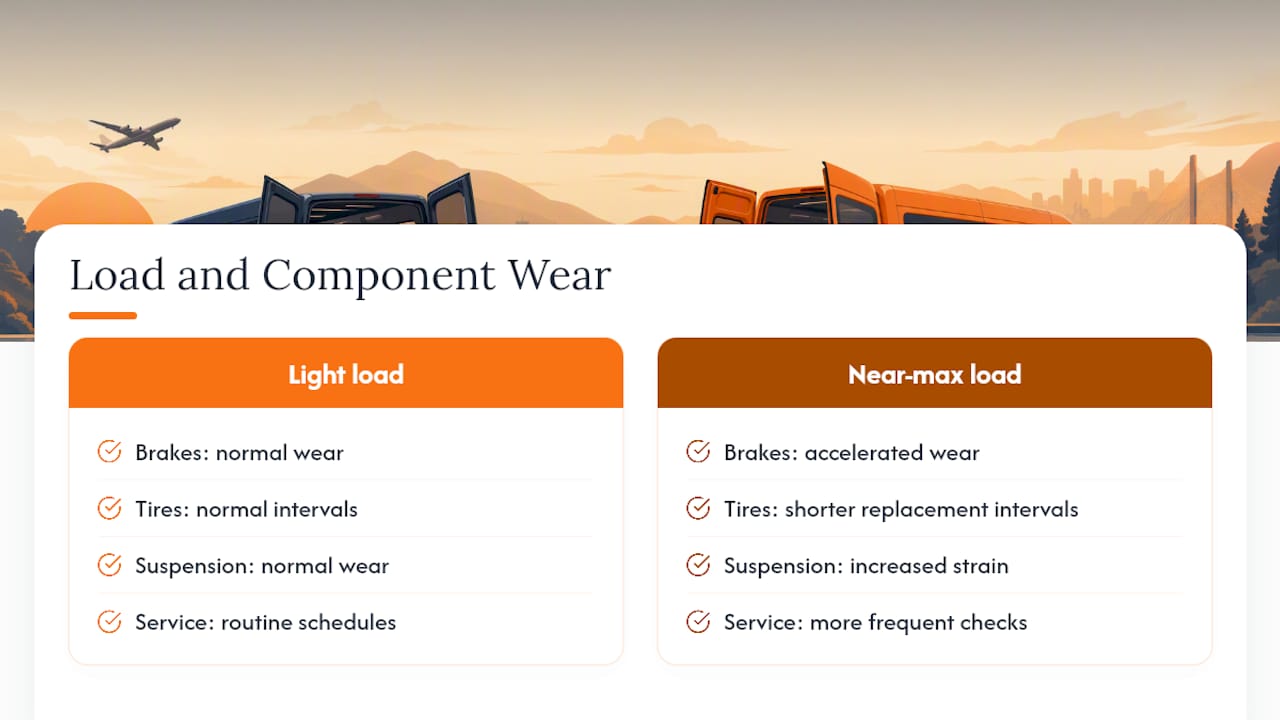
Where costs diverge is wear and tear from load. A van that regularly runs near its maximum passenger count puts more strain on brakes, tires, and suspension components over time than one that rarely fills every seat. Tire replacement intervals shorten under consistently heavy loads, and brake pads wear faster when a van is stopping with 14 people aboard versus eight.
For renters, this mostly matters indirectly. Rental companies factor higher-mileage, heavily loaded vans into their maintenance schedules and, occasionally, into pricing. If you’re comparing a well-maintained fleet against a budget operator, ask how often vans are serviced and whether tires and brakes get checked between every rental cycle, not just annually. A van that looks clean on the outside can still be overdue on brake service, and that’s not something you can spot from a photo.
Comparison of Engine Power and Performance
Seat count has no bearing on the engine under the hood. A Ford Transit, Mercedes-Benz Sprinter, GMC Savana, or Chevrolet Express typically offers the same engine and drivetrain options across both its 12- and 15-passenger trims, so horsepower and torque numbers don’t change based on how many rows of seats are installed.
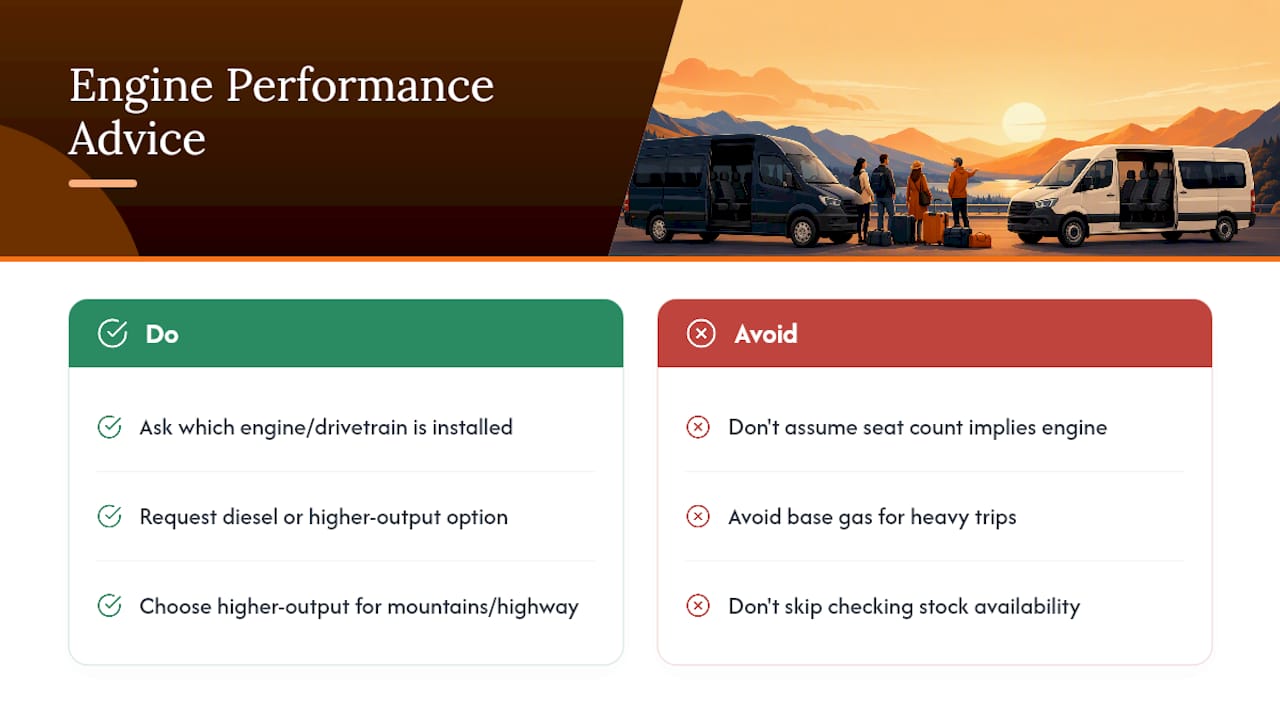
What does change is how that engine feels in practice. A gas or diesel engine rated for a given payload works harder when it’s hauling 14 adults and their bags than when it’s carrying eight people and empty seats. Acceleration softens, hill climbing takes longer, and passing on the highway requires more patience. Editorial reviews from outlets like Car and Driver consistently note that diesel-equipped trims handle sustained heavy loads with noticeably less strain than base gas engines, which matters more on long highway hauls than around-town driving.
If your trip involves mountain passes, long highway stretches, or consistently full seating, ask the rental company which engine and drivetrain combination is installed. Not every location stocks the higher-output option, and the difference shows up most when the van is at or near full capacity.
Resale Value and Depreciation Trends
Full-size passenger vans depreciate differently than passenger cars, largely because commercial and fleet buyers make up a meaningful share of the used market. A well-maintained Sprinter, Transit, Savana, or Express with clean maintenance records tends to hold value better than a neglected one, regardless of whether it was originally configured to seat 12 or 15.
Higher mileage accumulates faster on 15-passenger vans used for constant shuttle service, since that’s exactly the job they’re bought for. Heavy-use shuttle vans often show more wear by resale time, both mechanically and in the interior, which can pull down resale value compared to a 12-passenger van used for occasional road trips.
For fleet operators and rental companies, this dynamic shapes how vehicles get rotated out of service. A van that’s spent years running airport shuttle routes at full capacity typically gets retired earlier than a comfort-focused 12-passenger unit doing lighter duty. That’s one more reason renters benefit from asking a rental company how a specific van has been used, not just how old it is.
Publisher Perspective: What Our Renters Choose and Why
Most groups booking through Sprinter Van Rentals choose a 12-passenger van, and luggage is almost always the reason. Fifteen-passenger vans get reserved mostly by organizations running scheduled shuttles, where seat count outranks trunk space. What keeps renters coming back to Sprinter models specifically is availability across a wide network of cities, genuinely usable interior space, and the flexibility to reconfigure seating when a group’s plans change close to departure.
— Gabriel
How Sprinter Van Rentals Helps You Book the Right Fit
Once you know whether you need cargo room or maximum seats, booking gets simple. Sprinter Van Rentals lists both configurations side by side, with the 12-passenger Sprinter page built for groups traveling with luggage and the 15-passenger interior guide laid out for shuttle-style trips where seat count comes first.

Every listing shows real interior photos and seating layouts, so you’re not guessing about legroom or cargo space before you commit. If your group would rather not assign a driver, the driver-hire option puts an experienced large-vehicle driver behind the wheel instead. With nationwide availability across major cities, finding the right size for your trip usually takes minutes, not hours. Head to the Sprinter Van Rentals booking page to check availability for your dates and lock in the van your group actually needs.
Sources
- 12 vs 15 Passenger Van Rental - Which to Book? | Airport Van Rental
- Best 9+ seater vans for 2026 — Car and Driver
Recommended
Keep reading
How Much Is a Sprinter Van Rental? 2026 Pricing Guide
Real Mercedes-Benz Sprinter van rental prices in 2026 — daily rates, mileage, insurance, delivery fees, and how to lower your total.
How to Start a Sprinter Van Rental Business (2026 Playbook)
Step-by-step guide to launching a Sprinter van rental business — licensing, DOT/FMCSA rules, insurance, fleet financing, and marketing.
Mercedes Sprinter Van Rental in Orlando, FL — Where to Rent
Compare Mercedes-Benz Sprinter van rental options in Orlando, FL — MCO airport delivery, theme park runs, and 12 & 15-passenger pricing.